TL;DR: Bathroom mold removal in Vista, CA typically costs $350 to $750 for surface mold on grout or caulk, and $1,200 to $7,500 or more once mold has spread behind tile, into drywall, or under the subfloor from a failed shower pan. The biggest cost factor isn’t the mold itself, it’s how much demolition and rebuild the job needs once the wet material is exposed. Most homeowners insurance helps only when the moisture source was sudden, not a slow leak or ventilation problem.
If you peeled the caulk off your shower surround and found black staining climbing the drywall, or the floor near your toilet has felt soft for a few weeks, you’re probably past the point of a bleach-and-scrub weekend project. Bathroom mold almost always traces back to one of three sources: a failed shower pan or surround seal, a slow toilet supply or wax-ring leak, or an exhaust fan that’s never actually run (or never existed). Here’s what homeowners across Vista, from Buena Creek’s older stucco ranches to newer Shadowridge builds, actually pay to get it handled.
How Much Does Bathroom Mold Removal Cost in Vista, CA?
Most Vista homeowners pay between $350 and $7,500 for bathroom mold removal, with full tear-out-and-rebuild jobs sometimes running higher. The spread is wide because “bathroom mold” covers everything from a strip of mildew on grout to a rotted subfloor under a shower pan.
| Scenario | Typical Cost Range |
|---|---|
| Surface mold on grout, caulk, or paint (no containment needed) | $350 to $750 |
| Mold behind a shower surround, limited drywall affected | $1,200 to $2,500 |
| Mold in subfloor from a failed shower pan | $2,500 to $5,000 |
| Full bathroom remediation (drywall, insulation, vanity demo) | $3,500 to $7,500 |
| Remediation plus full rebuild (tile, drywall, vanity, flooring) | $6,000 to $12,000+ |
| Mold testing / post-remediation clearance sampling | $300 to $600 |
These are typical industry ranges for San Diego County, not a quote. Every bathroom is different once the walls come open, which is why Dry 1 Out Restoration and Construction provides a written scope and price before any demolition starts.
What Drives Bathroom Mold Removal Costs Up or Down?
The single biggest cost driver is how much hidden material has to come out, not the square footage of visible mold. A small stain on the surface can mean a straightforward cleaning, while that same stain over a shower pan can mean the subfloor is compromised underneath it.
Other factors that move the price:
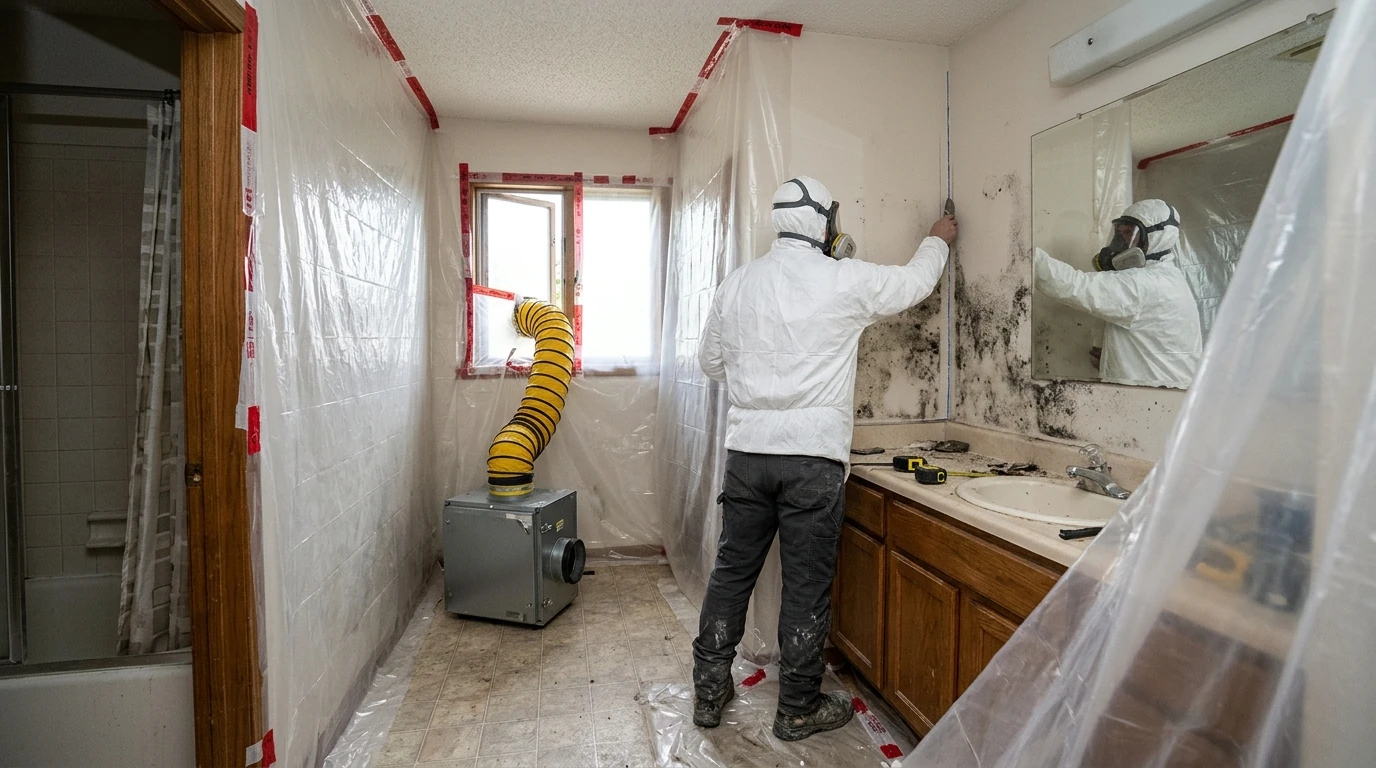
- Containment size. Mold remediation under the ANSI/IICRC S520 standard requires sealed poly containment and negative air pressure for anything beyond a small surface area. A one-wall job contains fast; a bathroom with mold in two or three cavities takes longer to seal and run.
- What’s behind the tile. Cement board holds up better than drywall behind a shower. If the original builder used standard drywall (common in older Vista homes near Downtown Vista and Buena Creek built before current code), it usually has to come out rather than be dried in place.
- The water source and how long it ran. A fast-caught supply line leak is a smaller job than mold that’s been growing behind a shower pan for months, which the EPA notes can begin within 24 to 48 hours of sustained moisture and only gets worse the longer it’s sealed behind tile.
- Rebuild scope. Removing moldy drywall or a subfloor is one invoice; replacing tile, a vanity, flooring, and paint is another. Because Dry 1 Out also handles reconstruction, the demo-to-rebuild handoff happens under one scope instead of two separate contractors.
- Testing. Third-party clearance testing isn’t required by California law, but it’s worth the cost if you’re selling the home or need documentation for an insurance claim.
Is This Surface Mildew or Mold Growing Inside the Wall?
Surface mildew wipes off with cleaner and doesn’t come back if the moisture source is fixed; mold that’s actually growing in drywall paper or wood keeps returning and often smells musty even after cleaning. The color and texture alone won’t tell you which one you have.
A quick test: clean the visible staining with a diluted bleach or EPA-recommended cleaner. If it’s gone in one pass and doesn’t reappear within a week or two with the fan running, it was likely surface mildew. If it comes back, darkens, or the drywall feels soft or bubbled when you press on it near the stain, the growth is probably inside the material, not on top of it. Our guide on black mold vs. regular mold covers how to tell the difference by appearance, though color is never a reliable way to judge how deep the problem goes. A moisture meter reading behind the tile is the only way to know for sure.
Will Homeowners Insurance Cover Bathroom Mold Removal?
Most homeowners policies only help with mold removal when it resulted from a sudden, accidental water event, like a supply line that burst without warning, not from a slow leak, condensation, or a bathroom fan that was never installed. A toilet that’s been seeping at the base for three months typically falls under gradual damage, which standard policies exclude.
Mold coverage itself is also often capped at a set dollar amount even when the underlying water loss is covered, so it’s worth checking your declarations page before assuming the full remediation cost is included. Document the leak source, the date you noticed it, and photos of the damage as soon as you find it. For a broader look at the claim side, our Vista mold remediation cost guide walks through documentation steps in more detail.
What Does the Remediation and Rebuild Process Actually Look Like?
Bathroom mold remediation follows a set sequence: inspect and isolate the source, contain the area, remove affected material, treat and dry what remains, then rebuild. Skipping or shortcutting any of these steps is usually why mold comes back.
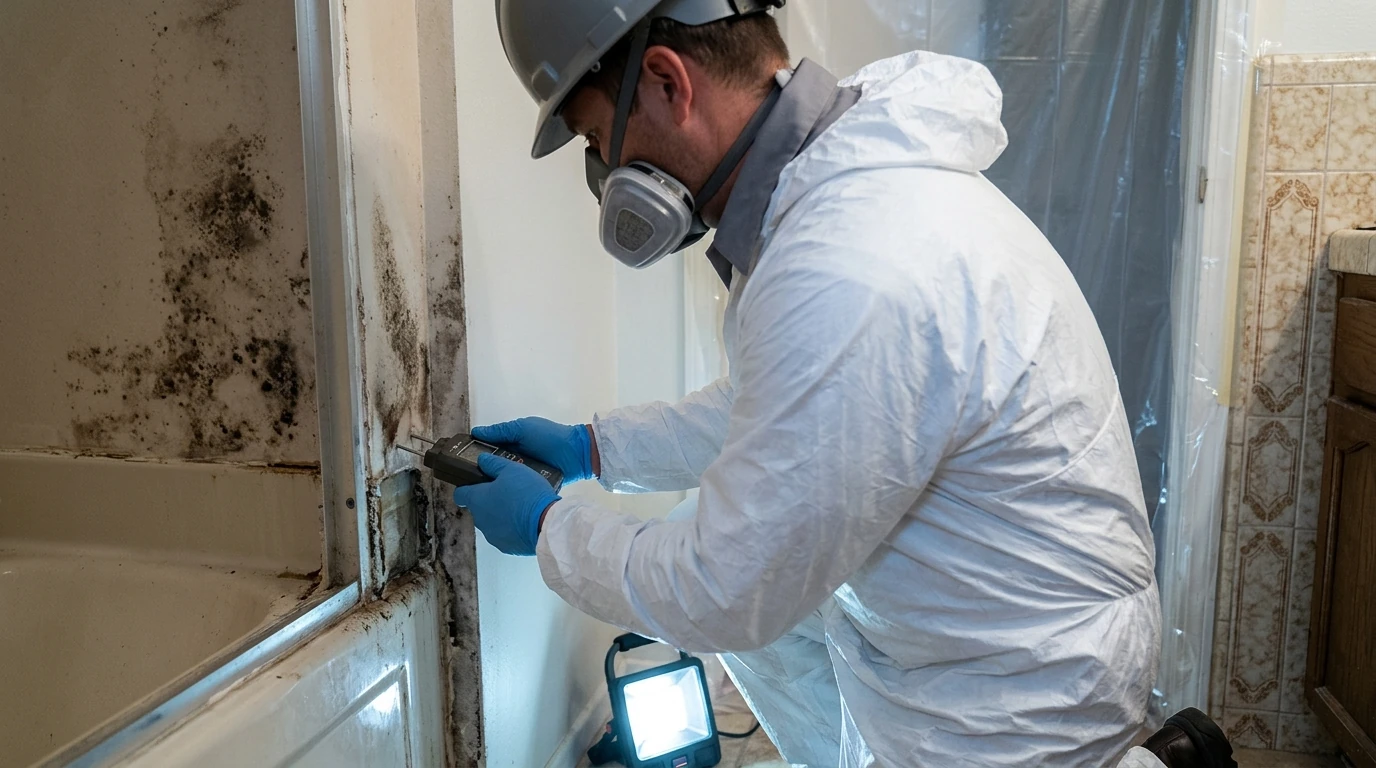
- Inspection. A technician checks moisture levels behind tile and under the floor with a meter, not just a visual look, since mold often spreads further than the stain shows.
- Containment. Poly sheeting seals the bathroom off from the rest of the home, with negative air pressure pulling spores into a HEPA filtration unit rather than into the hallway.
- Removal. Affected drywall, insulation, and sometimes subfloor or cabinetry come out. Non-porous materials like tile and some framing can often be cleaned and treated rather than replaced.
- Drying and treatment. Remaining structural material is dried to an appropriate moisture level and treated with an EPA-registered antimicrobial.
- Rebuild. New drywall, cement board, tile, flooring, or vanity go back in. This is where having one company handle both the mold remediation and the reconstruction saves a step, since there’s no gap between demo and rebuild while you wait on a second contractor’s schedule.
If the original moisture source was a plumbing failure rather than ventilation, the water damage side of the job (drying framing, extracting standing water) runs under our water damage restoration process before remediation even starts.
If you’re looking at visible mold in a Vista bathroom right now, the first useful step is a moisture inspection, not a bid. Schedule a mold assessment with Dry 1 Out at (888) 379-1688 and get a written scope before anything gets opened up.
About Dry 1 Out Restoration and Construction
Dry 1 Out Restoration and Construction is an IICRC Certified Firm with technicians holding IICRC AMRT (mold), WRT, and ASD credentials, operating from offices in Vista, CA and Hayward, CA, serving North San Diego County and the Bay Area respectively. Licensed under California CSLB #993442 and available 24/7, the company’s Vista crew handles mold remediation, water damage restoration, and reconstruction from a single scope, including bathroom mold jobs that start as a plumbing leak and end as a full rebuild.