24/7 Emergency Fire Damage Restoration in Vista
24/7 emergency fire damage restoration in Vista and surrounding areas. IICRC-certified, insurance billing accepted. Call (888) 379-1688.
Fire damage emergency in your Vista home? We answer 24/7, call (888) 379-1688 now. Soot doesn’t sit still once a fire is out. Acidic residue starts etching chrome, glass, and aluminum within hours, smoke odor works its way into drywall and subfloor, and anything left wet from suppression efforts can start growing mold in the same timeframe as a flood. The longer a structure sits untouched after a fire, the more of it has to be replaced instead of cleaned.
What Fire Damage Restoration actually involves
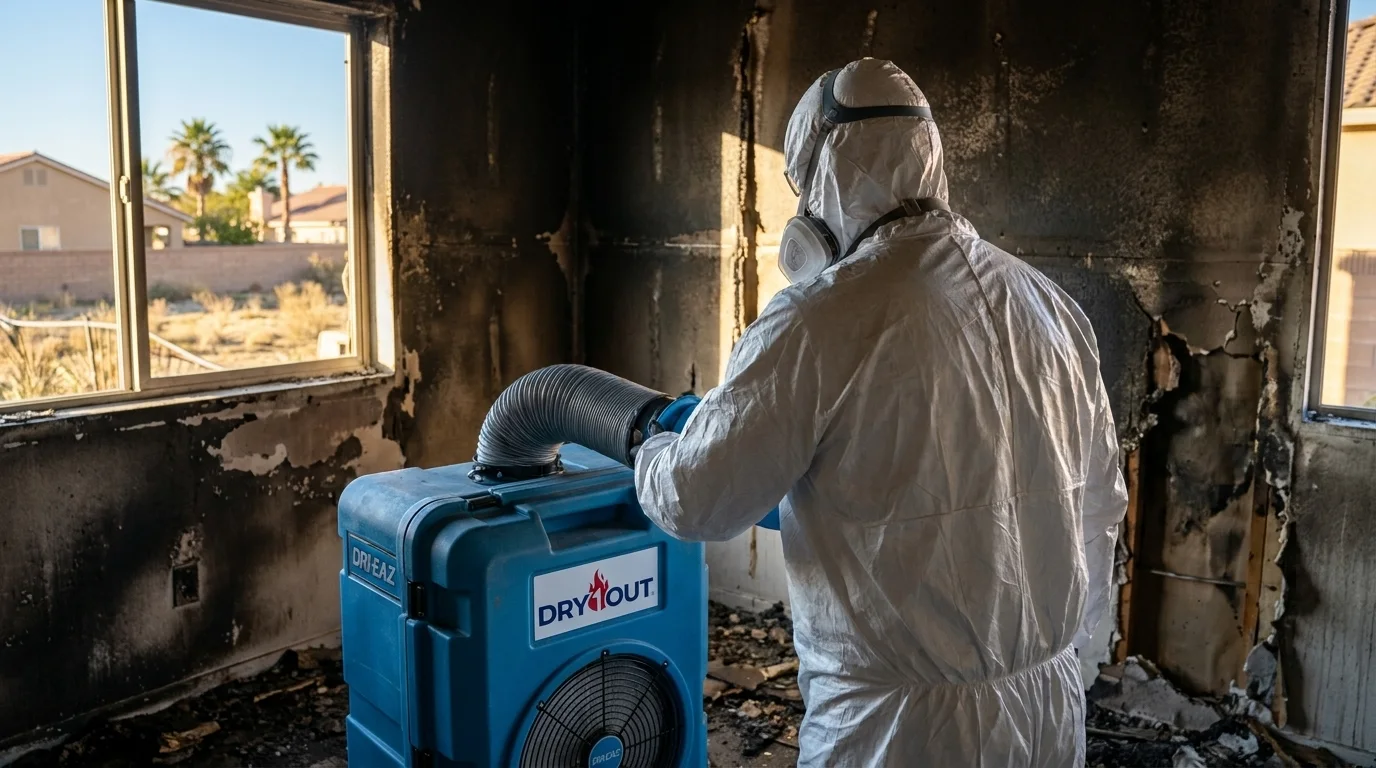
Fire damage restoration is really three jobs running at once: removing the soot and residue, neutralizing the odor at a molecular level, and drying out anything soaked by hose lines or sprinklers before secondary water damage sets in. The type of soot matters. A kitchen grease fire leaves a different residue than a fire that burned synthetic furniture or electrical wiring, and each requires a different cleaning agent and approach. Crews typically work room by room: content inventory and pack-out for anything salvageable, dry and wet sponge cleaning on structural surfaces, HEPA vacuuming, and thermal fogging or ozone treatment to break down odor molecules that have bonded to porous materials. Depending on the extent of the fire, this process runs anywhere from a few days for a contained, single-room fire to several weeks when structural framing, insulation, or HVAC ductwork needs to be opened up and replaced.
Our process
- Soot and residue characterization. Before any cleaning starts, we identify whether the residue is protein-based, synthetic/plastic-based, or a mix, because using the wrong cleaning agent can set a stain permanently into drywall, wood trim, or fabric.
- Structural stabilization and water mitigation. Suppression water, fire hose runoff, or sprinkler discharge gets extracted and dried per the IICRC S500 standard before odor and soot work begins, otherwise you end up fighting mold on top of smoke damage.
- Contents pack-out and cleaning. Salvageable belongings are inventoried, photographed, and moved off-site for ultrasonic or specialty cleaning while structural work happens, which also protects them from dust and cross-contamination during repairs.
- Thermal fogging and ozone or hydroxyl treatment. Heat-based fogging mimics how smoke originally penetrated materials, forcing deodorizing agents into the same pores the smoke reached. Ozone or hydroxyl generators then run in a sealed space to break down remaining odor compounds in air and soft materials.
- Final cleaning, seal, and reconstruction handoff. Surfaces are cleaned or sealed with an odor-blocking primer where needed, and any framing, drywall, or flooring that didn’t survive gets scoped for rebuild.
What separates a good fire damage response from a bad one
The most common mistake is treating fire damage like a cleaning job instead of a chemistry problem. Soot is acidic, and the longer it sits, the more it etches into metal fixtures, glass, and even porcelain. A rushed job wipes visible soot off walls but skips the HVAC system, which keeps recirculating smoke odor for months after the “cleanup” is done. Another miss is odor masking instead of odor removal, spraying perfume over the problem instead of using ozone or hydroxyl treatment to actually break down the smoke molecules bonded into drywall and insulation. Insurance adjusters look closely at documentation: photos of soot patterns before cleaning, moisture readings from suppression water, and a clear scope distinguishing what was cleaned versus what had to be removed and replaced. Structural fire damage that isn’t fully opened up and inspected, especially around electrical runs and roof framing, can hide damage that shows up as a warped beam or a charred stud years later.
What does Fire Damage Restoration cost?
Cost depends heavily on how much of the structure burned versus how much just absorbed smoke, and whether suppression water added a drying job on top of the cleanup. Every loss gets a written scope before work begins, since no two fires behave the same way even in similar-sized homes. Most homeowners insurance policies cover fire and smoke damage restoration as part of a standard fire claim, including contents cleaning and odor removal, though coverage details vary by policy and carrier.
| Scenario | Typical range |
|---|---|
| Smoke odor only, no visible soot (small kitchen fire) | $500 - $2,000 |
| Single room, soot and smoke cleanup | $2,500 - $7,500 |
| Multi-room fire with contents pack-out | $8,000 - $20,000 |
| Structural fire damage with framing or roof repair | $20,000 - $60,000+ |
| Whole-structure fire with major rebuild | $60,000 - $150,000+ |
Seasonal & regional considerations
Vista’s dry season and Santa Ana wind events raise the risk of both wildfire-adjacent smoke infiltration and structure fires fueled by dry brush close to homes in the hillside neighborhoods. Older homes near downtown Vista with original wood-frame construction and plaster walls tend to hold onto smoke odor longer than newer stucco-and-drywall builds, since plaster is more porous. Homes with older knob-and-tube or early aluminum wiring are also more prone to electrical fires, which tends to mean more smoke travel through wall cavities than a contained kitchen fire.
Service area
We respond to fire damage calls throughout Vista and nearby communities including Oceanside, Carlsbad, San Marcos, Escondido, and Fallbrook.
If your home or business in Vista has smoke, soot, or fire damage, call (888) 379-1688 to begin smoke and soot removal before odor and residue set deeper into your walls, flooring, and belongings.
Services We Handle
- Fire & Smoke Restoration
- Fire and Smoke Damage Cleanup
- Fire Damage Cleanup
- Fire Damage Cleanup and Repair
Frequently Asked Questions
Does homeowners insurance cover fire damage restoration?
What's the difference between protein soot and synthetic soot, and why does it matter?
Is ozone treatment safe to use in an occupied home?
Do you need to clean the HVAC ducts after a house fire?
How long does smoke odor removal typically take?
Can my belongings be saved after a fire, or do they need to be replaced?
Looking for the best fire damage restoration company in Vista?
Dry 1 Out Restoration and Construction provides licensed and insured fire damage restoration in Vista, CA and the surrounding area, and has served local property owners since 2026. Customers rate us 5.0 out of 5 stars across 18 Google reviews. We answer calls 24/7 — call (888) 379-1688 for immediate help.
Need Fire Damage Restoration now?
We respond 24/7 across Vista and surrounding CA cities.
Related Coverage
- Our Restoration Services
- Contact Dry 1 Out Restoration and Construction
- Restoration Services in Berkeley
- Restoration Services in Carlsbad
- Restoration Services in Chula Vista
- Restoration Services in Concord
- Restoration Services in El Cajon
- Restoration Services in Encinitas
- Restoration Services in Escondido
- Restoration Services in Fremont
- Restoration Services in Hayward
- Restoration Services in Oakland
- Restoration Services in Oceanside
- Restoration Services in San Diego
- How To Choose a Restoration Company in Vista (Without Getting Burned)
- The Fire Damage Restoration Process, Explained
- How Professionals Remove Smoke Odor (and Why DIY Usually Fails)