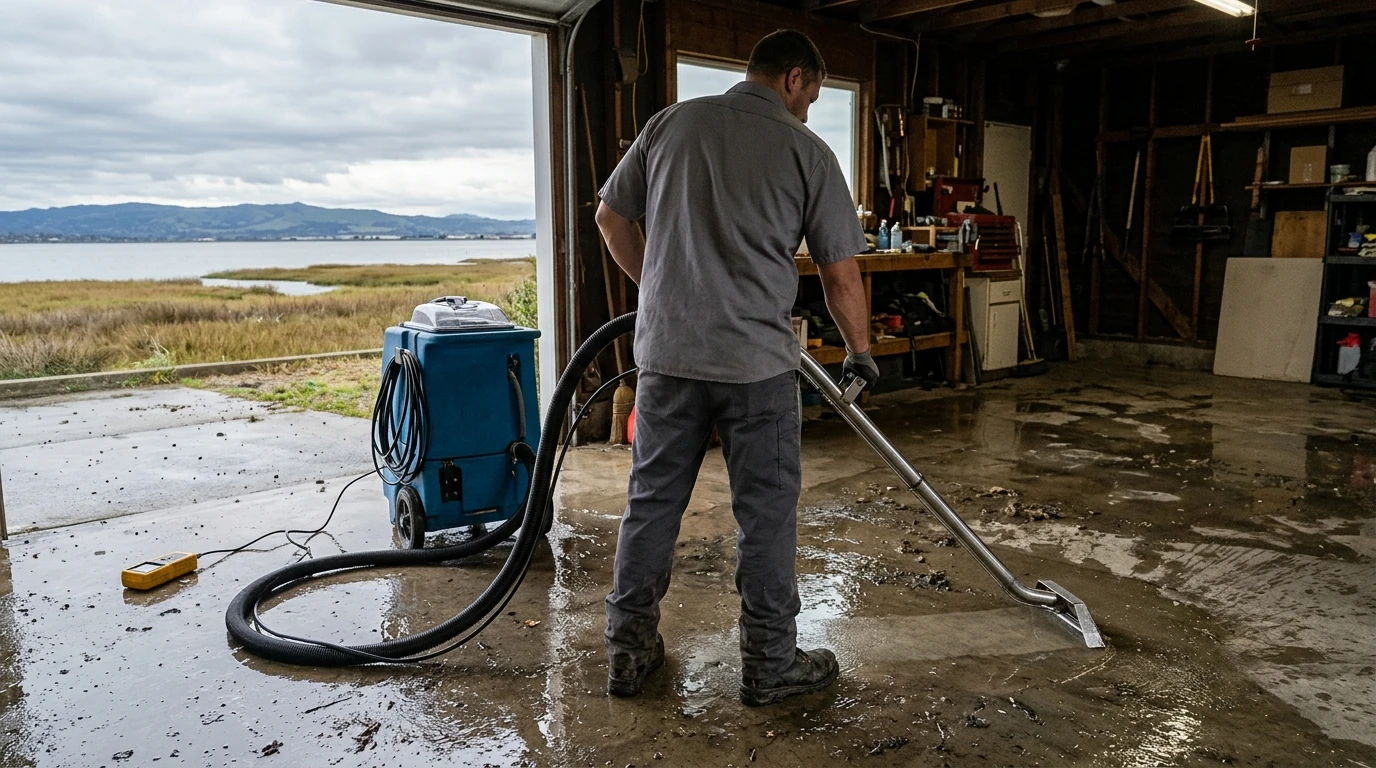
In Hayward, flood cleanup for a residential property typically costs $1,500 to $12,000, with a full ground-floor loss running higher once drywall, insulation, and flooring have to come out. The exact number depends on how much water came in, how contaminated it was, and how many hours passed before a crew started pulling it out. Homes near the Hayward Regional Shoreline and the lower stretches around Mt. Eden see this more often than most, when a heavy winter storm or a king tide pushes bay water into yards and garages faster than the storm drains can carry it away.
What does flood cleanup cost by scenario in Hayward?
Flood cleanup costs scale with square footage, water category, and how much material gets removed instead of dried in place. A flooded garage with a few inches of standing water costs far less than a living room where contaminated water soaked into drywall and insulation.
| Scenario | Typical Cost |
|---|---|
| Water extraction only, single room, standing water | $500 - $1,500 |
| Flooded garage cleanup, concrete slab, minor debris | $800 - $2,500 |
| Single room, contaminated water, drywall and insulation removed | $3,500 - $8,000 |
| Whole ground floor flooded, structural drying plus reconstruction | $10,000 - $25,000+ |
| Air mover and dehumidifier rental, per day, structural drying | $150 - $400/day |
| Antimicrobial treatment and sanitizing, per affected room | $300 - $900 |
These are typical ranges for Bay Area flood jobs, not a quote. Dry 1 Out provides a written scope of work before any demolition or drying equipment goes in, so homeowners know what they’re paying for and why.
What factors affect the price of flood cleanup in Hayward homes?
The biggest cost drivers are the water’s contamination level, how many square feet it touched, and how fast cleanup started. Flood water coming from outside the home, bay overflow, street flooding, or a backed-up storm drain, is considered Category 3 (black water) under the ANSI/IICRC S500 standard, which means more materials get removed instead of dried, and the crew needs antimicrobial treatment and PPE.
Response time matters just as much. The EPA notes mold can start growing within 24 to 48 hours on wet drywall and carpet padding, so a flood that sits for two or three days before anyone calls for help usually costs more to remediate than one addressed the same day, simply because more material has already failed.
Square footage and what’s underneath also change the number. A Tennyson-Alquire bungalow with original hardwood floors needs slower, specialty drying equipment that a newer Fairway Park home with vinyl plank flooring doesn’t. Finished basements, built-in cabinetry, and older plaster walls all add labor hours.
If the water sat for more than a couple of days, it’s worth reading our guide on mold remediation cost in Hayward before assuming drying alone will solve the problem.
Does insurance cover flood cleanup in Hayward, CA?
Flood water that enters from outside the home, rising bay water, storm surge, or surface water running off the street, is excluded from a standard homeowners policy and requires a separate flood policy through the National Flood Insurance Program or a private flood carrier. A burst pipe or appliance failure inside the home is a different situation and is typically covered as sudden, accidental water damage.
This distinction catches a lot of Hayward homeowners off guard, especially near the shoreline where flood risk is real but a flood policy is easy to overlook. If you’re not sure which category your loss falls into, Dry 1 Out’s crew documents water lines, affected materials, and moisture readings on arrival, which supports whichever claim path applies. For the broader rules on what a homeowners policy does and doesn’t pay for, see our water damage insurance coverage guide.
What happens during a professional flood cleanup?
A professional flood cleanup moves through five phases: extraction, assessment, removal of unsalvageable materials, structural drying, and sanitizing, each documented with photos and moisture readings for the insurance file.
- Water extraction: truck-mounted or portable pumps remove standing water first, usually within the first hour on site.
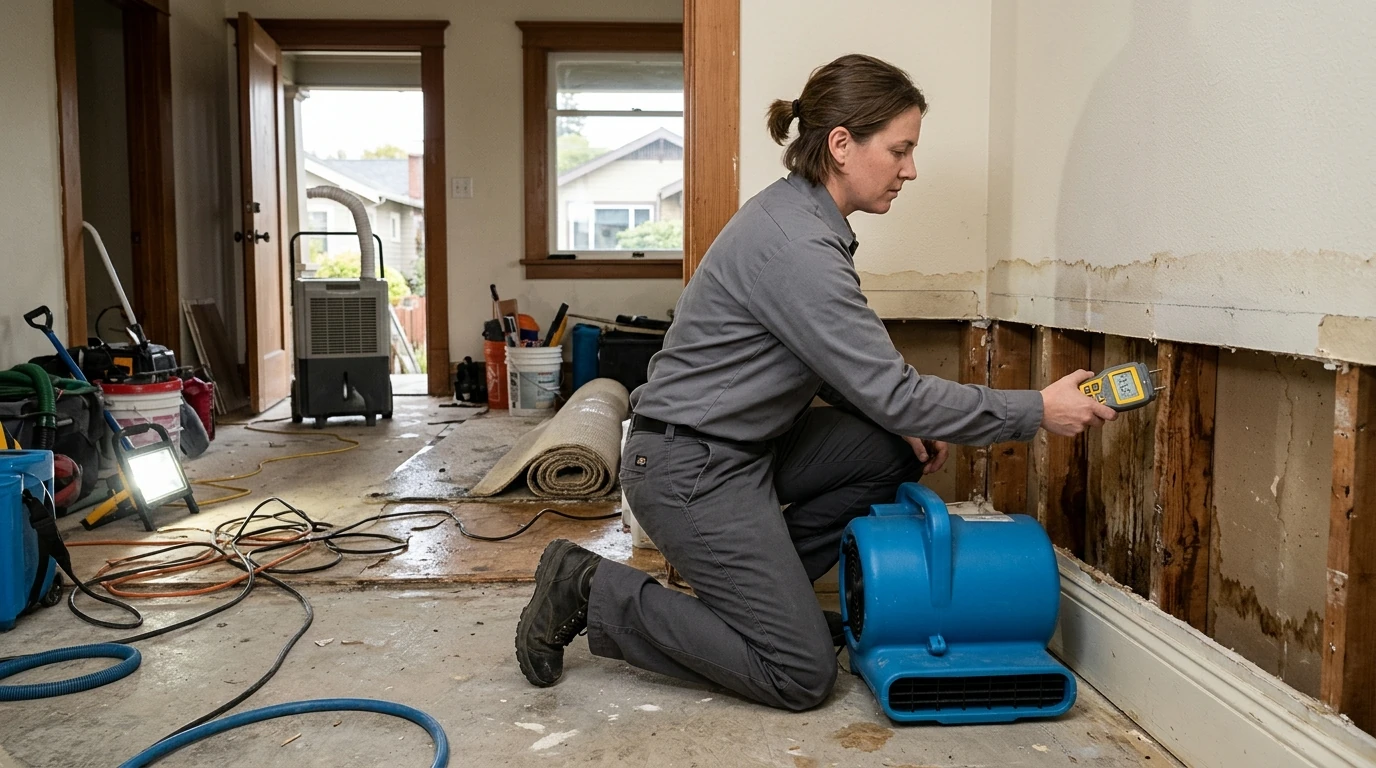
- Moisture mapping: technicians use moisture meters, and sometimes thermal imaging, to find water that traveled into walls, subfloor, and cabinetry.
- Material removal: with contaminated water, porous materials like carpet pad, drywall, and insulation typically get cut out rather than dried in place.
- Structural drying: air movers and dehumidifiers run for several days, monitored daily until moisture readings return to a dry standard.
- Antimicrobial treatment and sanitizing: affected surfaces get treated before reconstruction starts.
Reconstruction, drywall, flooring, and trim, follows once drying is verified complete. See our flood damage restoration and emergency water removal pages for what’s included at each step.
If water just came into your Hayward home or garage, photograph it before you move anything, then request an assessment. The sooner extraction starts, the smaller the final number usually is.
About Dry 1 Out Restoration and Construction
Dry 1 Out Restoration and Construction is an IICRC Certified Firm licensed in California (#993442), in business since 1998, serving North San Diego County from an office in Vista and the Bay Area from an office in Hayward. Their crews handle water damage restoration, flood damage restoration, mold remediation, fire and smoke restoration, storm damage restoration, and reconstruction across both regions, with every job documented to support the insurance claim process.
Need help now? Call Dry 1 Out Restoration and Construction at (888) 379-1688.