TL;DR: Sewage backup cleanup in Vista, CA typically costs $500 to $1,500 for a single toilet overflow with no material removal, and $6,000 to $20,000+ when a main line backup floods multiple rooms, a basement, or a crawlspace. Sewage is always Category 3 (black water), which means contaminated porous materials get removed, not just dried. Most standard homeowners policies do not cover sewer backup unless a water backup endorsement was added.
If sewage just came up through a floor drain, a toilet, or a shower in your Shadowridge or Downtown Vista home, the first decision you make matters more than the cost. Grabbing a mop and a bucket of bleach feels productive, but it spreads contamination into subfloors and wall cavities you can’t see. Before you touch anything, here’s what this kind of job actually costs and why the price swings so widely.
How much does sewage backup cleanup cost in Vista, CA?
Most Vista homeowners pay between $500 and $20,000 for sewage backup cleanup, and the single biggest factor is how much contaminated water spread and how many porous materials it touched. A contained toilet overflow in one bathroom costs far less than a main line backup that pushes Category 3 (black) water into a finished basement or crawlspace.
Sewage is classified as Category 3 water under the ANSI/IICRC S500 standard, the industry’s governing document for water damage restoration. That classification drives the cost: Category 3 jobs require removal of affected carpet, pad, drywall, and insulation rather than drying them in place, plus antimicrobial treatment and, often, post-remediation testing to confirm the space is clean. A toilet overflow with urine but no solid waste is typically Category 2; anything from a sewer line, a floor drain, or a toilet overflow with feces is Category 3, no exceptions.
| Scenario | Typical Cost Range |
|---|---|
| Single bathroom, toilet overflow, minimal material removal | $500 - $1,500 |
| Main line backup, one room, some flooring/drywall removed | $2,500 - $6,000 |
| Multi-room or finished basement backup, significant demo | $6,000 - $12,000 |
| Crawlspace or whole-structure backup with structural drying | $10,000 - $20,000+ |
| Mold remediation add-on (if drying is delayed past 48 hours) | $1,500 - $5,000+ |
Older homes around Downtown Vista and Buena Creek with original clay or cast-iron sewer laterals tend to see more main-line backups than newer construction near Vista Business Park, simply because older pipe materials crack and root-intrude over time.
What actually drives the price up or down?
The price moves on five things: how much square footage got wet, how many porous materials have to come out, how deep the water sat before anyone responded, whether testing is needed to clear the space, and how hard the area is to access.
Square footage and depth matter most. A puddle in a powder room is a few hours of extraction and sanitizing. Standing water that sat in a basement overnight soaks into baseboards, drywall up to a foot or more, and anything stored on the floor, all of which usually has to be cut out and replaced.
Material removal is the next biggest cost driver. Carpet, pad, and any drywall that wicked contaminated water are removed, bagged, and disposed of per IICRC S500 protocols rather than dried, because porous materials that touched black water can’t be reliably decontaminated. Hard surfaces like tile, concrete, and sealed wood are cleaned and disinfected instead of removed, which keeps costs down.
Finally, antimicrobial application and air quality testing add a few hundred dollars but confirm the space is safe to rebuild. Skipping that step to save money is how homeowners end up with a mold problem on top of the original backup, which you can read about in our post on how quickly mold grows after water damage.
Why shouldn’t I clean up sewage myself?
Sewage cleanup isn’t a job for a mop, a wet vac, and bleach because Category 3 water carries bacteria, viruses, and parasites that ordinary household cleaners don’t fully neutralize. Bleach disinfects surfaces but doesn’t reach contamination that has soaked into drywall, subfloor, or insulation.
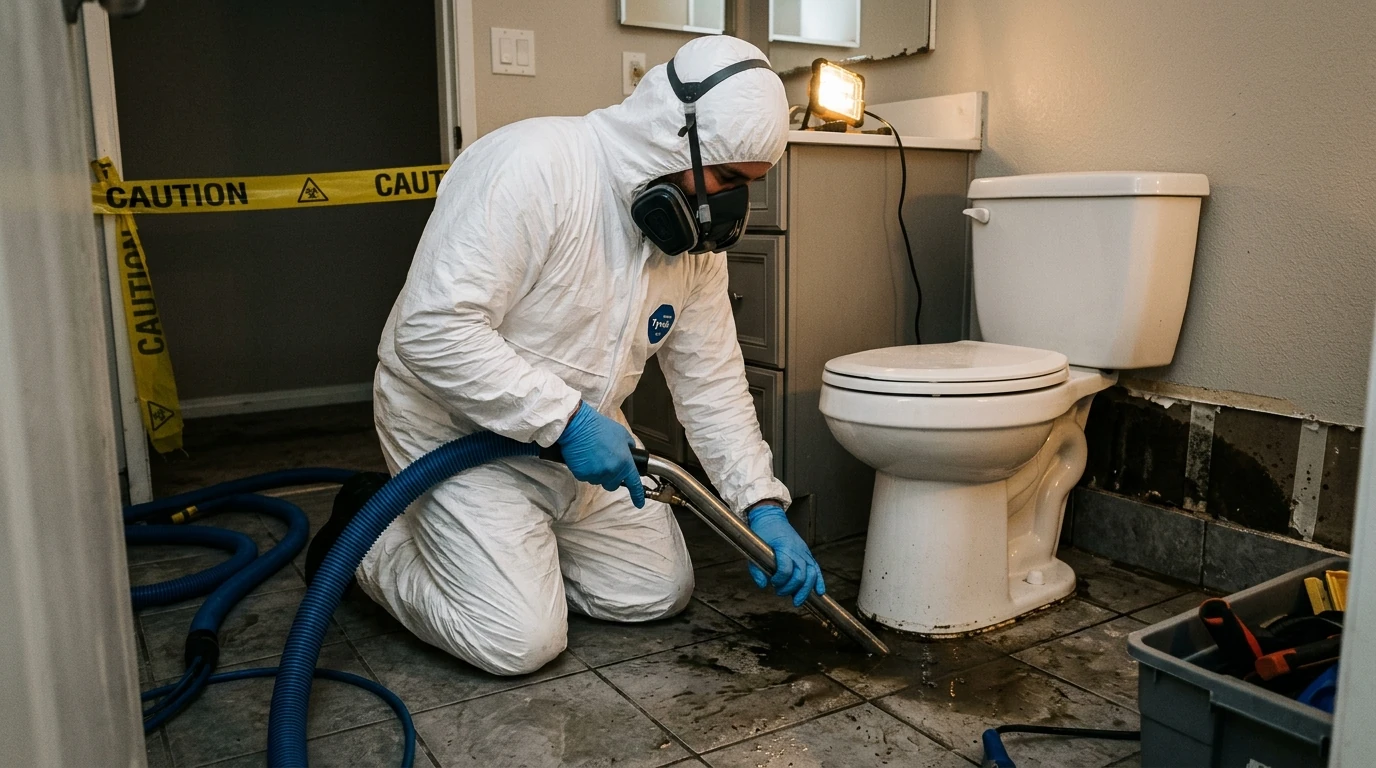
There’s also a real exposure risk. Technicians handling Category 3 water wear full protective suits, N95 or higher respirators, and double gloves for a reason: direct contact or inhaling aerosolized particles during extraction can cause gastrointestinal illness and other infections. The CDC’s guidance on cleaning safely after a disaster specifically calls out sewage-contaminated water as a hazard requiring protective equipment, not casual cleanup.
The other risk is incomplete removal. If contaminated drywall or carpet pad is left in place because it “looked dry,” the contamination and odor come back, usually alongside mold. What looks like a DIY savings on day one often becomes a bigger, more expensive job a few weeks later.
Does homeowners insurance cover sewage backup cleanup?
Most standard homeowners policies do not automatically cover sewer or drain backup. Coverage usually requires a separate water backup (sometimes called “sewer and sump”) endorsement added to the policy, and even then it typically carries its own sublimit, often in the $5,000 to $10,000 range.
Without that endorsement, a sewer backup claim is commonly denied as a maintenance issue, especially if the backup stemmed from a clogged or deteriorating line on the homeowner’s side of the connection. Check your declarations page for a water backup or sump overflow endorsement before assuming coverage exists. The Insurance Information Institute’s overview of what’s covered by a standard homeowners policy is a useful starting point, and our post on does homeowners insurance cover water damage walks through sudden-loss coverage in more detail.
Even when coverage applies, documentation protects the claim: photos before anything is touched, a written scope of work, and disposal records for removed materials. Dry 1 Out Restoration and Construction provides that documentation as part of every sewage cleanup, which matters whether the claim is approved or the homeowner is paying out of pocket.
What does the cleanup process actually involve?
Sewage backup cleanup follows a set sequence: stop the source, assess and extract, remove contaminated materials, disinfect, dry, and verify.
- Stop the source. The crew shuts off the fixture or, for a main line issue, confirms the line is clear (often via a plumber) before cleanup starts, since cleaning a space that’s still backing up wastes time and money.
- Assessment and extraction. Technicians in full PPE assess how far the Category 3 water traveled, then extract standing water with truck-mounted or portable pumps.
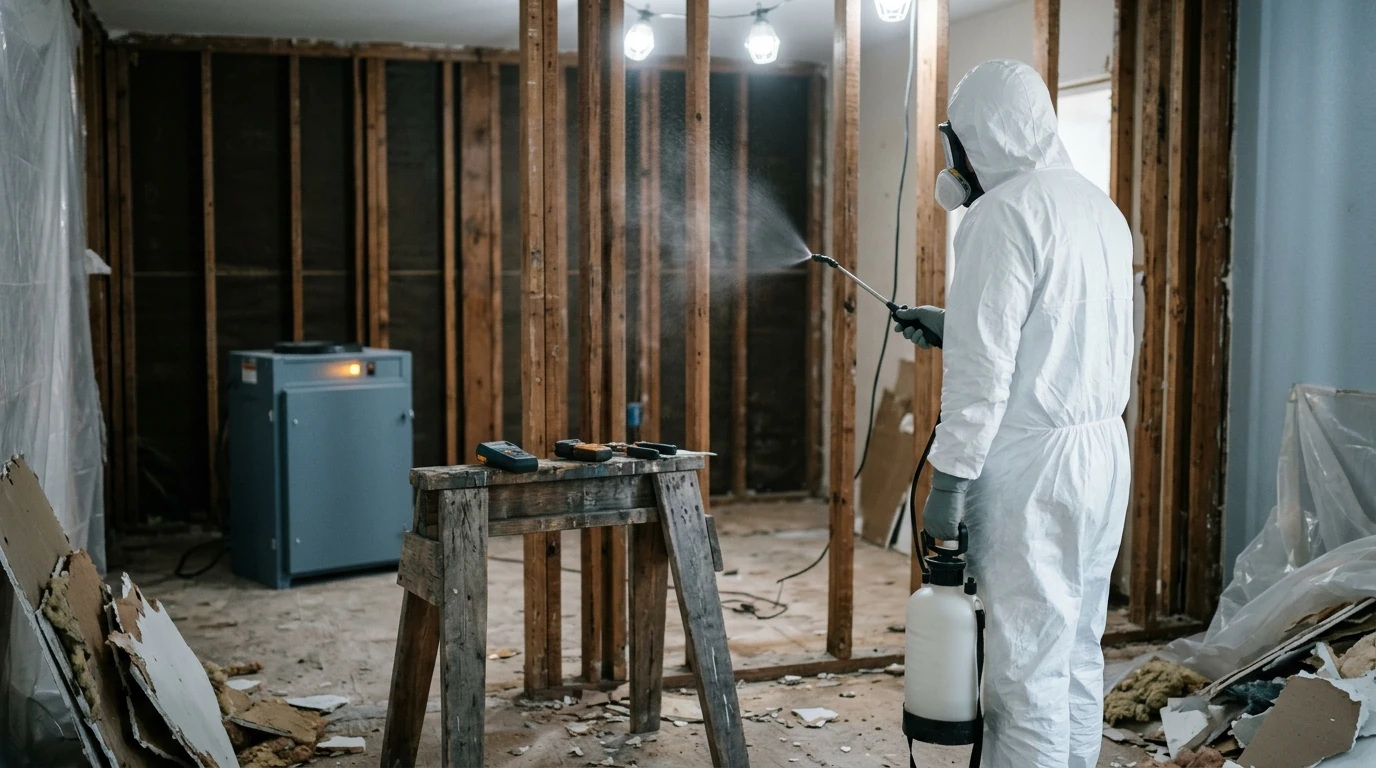
- Material removal. Carpet, pad, and any drywall or insulation that absorbed contaminated water are removed and bagged for disposal.
- Cleaning and disinfection. Hard surfaces and remaining structural materials are cleaned and treated with an EPA-registered antimicrobial.
- Structural drying. Air movers and dehumidifiers bring the space to a dry standard consistent with IICRC S500, typically monitored over 2-4 days depending on how much material was affected.
- Verification and rebuild. Moisture readings confirm the space is dry before any flooring, drywall, or baseboard goes back in, which is often handled as part of the same job through reconstruction.
For most single-bathroom backups, extraction and disinfection happen in a day, with drying running another 2-3 days. Main-line backups affecting a basement or crawlspace can take a week or more once demo and structural drying are factored in.
If sewage has backed up through a floor drain, toilet, or basement fixture, stop using water in the house and avoid walking through the affected area until it’s been assessed. Call Dry 1 Out Restoration and Construction at (888) 379-1688 for a sewage cleanup assessment with a written scope before any work begins.
About Dry 1 Out Restoration and Construction
Dry 1 Out Restoration and Construction is an IICRC Certified Firm (license #993442) based in Vista, CA, with a second office in Hayward, CA, serving North San Diego County and the Bay Area. The crew handles sewage cleanup, water damage restoration, mold remediation, fire and smoke restoration, and reconstruction, and answers calls 24/7.