
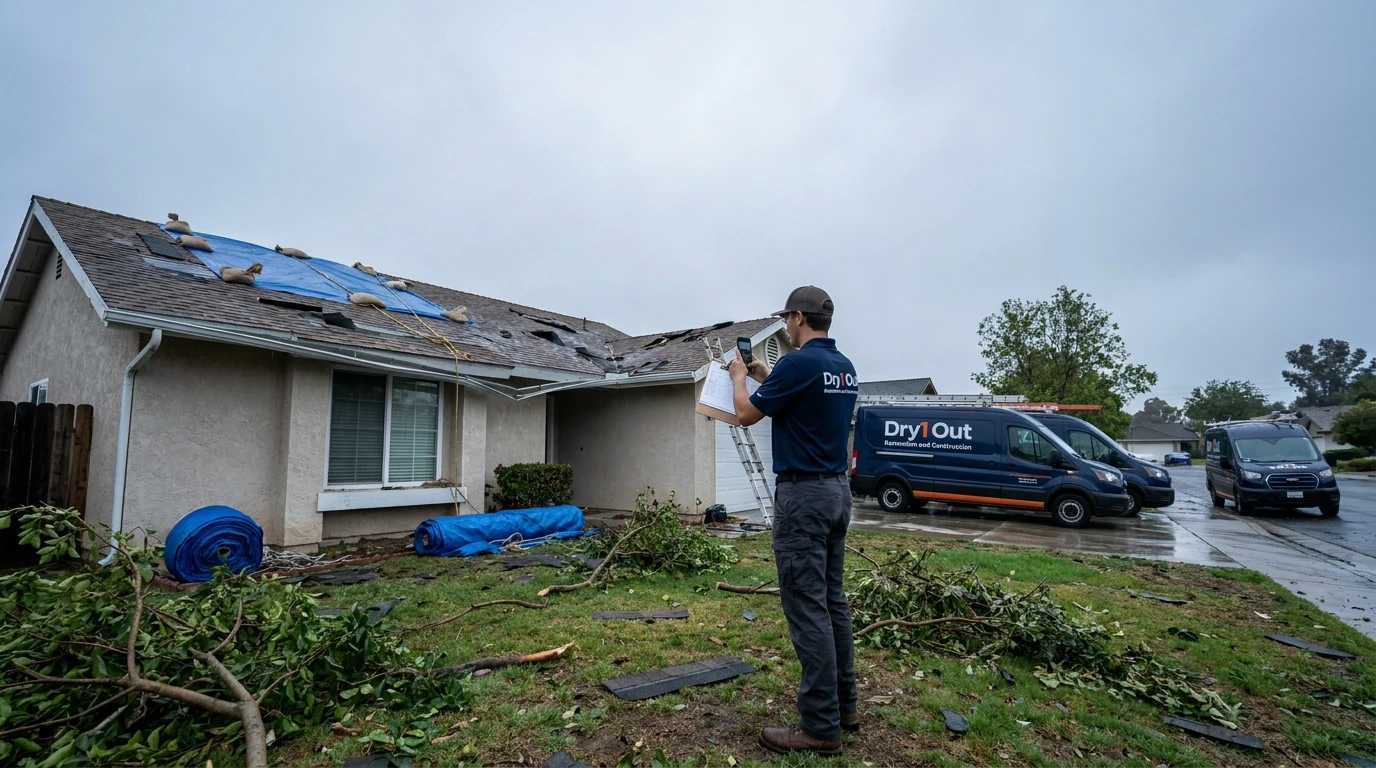
If a storm just came through Vista and you’re staring at a stained ceiling, a torn-up fence, or water pooling where it shouldn’t be, the order of operations matters more than the phone call itself. Before you dial your insurance company, walk the property and document everything: photos, video, a written list of what’s damaged and when you first noticed it. Insurers process storm claims faster and with fewer disputes when the homeowner shows up with organized evidence instead of a verbal description. This checklist covers what to gather, what to avoid, and when the damage is bad enough that documentation alone won’t cut it.
What Storm Damage Actually Looks Like in Vista
North County San Diego doesn’t get hurricanes, but it gets two things that cause real damage: Santa Ana wind events that can tear loose roof tiles, shingles, and fascia, and winter atmospheric river storms that dump heavy rain in a short window. Older Vista homes, especially the stucco-and-tile-roof stock common in the hillside neighborhoods, often have roof penetrations (vents, flashing, chimneys) that hold up fine in normal weather but fail the moment wind-driven rain gets underneath a lifted tile. Once water gets past the roof covering, it can travel along the underlayment and show up as a stain several feet from the actual entry point, which is why ceiling damage rarely lines up with where you’d guess the leak started.
The Checklist: Do This Before You Call
- Photograph and video everything first. Wide shots of each affected room, then close-ups of specific damage: water stains, cracked drywall, saturated carpet, broken windows, missing roof tiles. Timestamp matters, so use your phone’s camera rather than a screenshot.
- Pull your policy and find three numbers: your wind/storm deductible (sometimes separate from your standard deductible), your dwelling coverage limit, and your additional living expenses (ALE) coverage if the home becomes unlivable.
- Make a written damage inventory. Room by room, list what’s affected and, where you can, the approximate age or replacement cost of built-in items like flooring or cabinetry.
- Check for safety hazards before you go further: standing water near outlets, sagging ceiling sections that could collapse, exposed wiring, or a roof that’s still actively leaking.
- Do temporary, reasonable mitigation. Most policies require you to prevent further damage: a tarp over an exposed roof section, a bucket under an active drip, moving furniture off a wet floor. Keep receipts for any materials you buy.
- Note the exact date and time the damage occurred, or your best estimate, since claims tied to a specific storm event are usually easier to process than vague timelines.
- Call your agent or carrier’s claims line once steps 1 through 6 are done, not before.
What Not to Do While You’re Waiting
Don’t start full repairs before the adjuster has seen the damage or you’ve been told in writing that it’s fine to proceed, since removing damaged material without documentation can give a carrier grounds to dispute scope. Don’t throw away damaged items like carpet, drywall sections, or furniture until they’ve been photographed and, ideally, until the adjuster has had a chance to inspect them. Don’t assume a verbal description to your agent counts as filing, get the claim number and a reference to what was said in writing. And don’t ignore water intrusion because it looks minor, a small ceiling stain from a storm two weeks ago can mean wet insulation and framing that’s already supporting mold growth, which is a very different claim conversation than a fresh leak.
When the Damage Is Bigger Than a Checklist
Photos and a mitigation bucket are enough for a cracked window or a few missing roof tiles. They’re not enough once water has gotten into wall cavities, subfloor, or insulation, because moisture you can’t see is moisture that keeps causing damage after the claim is filed. If you’re dealing with standing water inside the home, a ceiling that’s sagging or soft to the touch, saturated carpet padding, or any smell of must starting to develop, that’s the point to bring in a restoration contractor rather than relying on a shop vac and fans. A professional storm damage restoration team can document moisture readings with equipment your adjuster will recognize, which strengthens your claim rather than just drying the space. Dry 1 Out Restoration and Construction works directly with Vista homeowners on this kind of storm damage, and documentation generated during mitigation often becomes part of the claim file itself.
What Happens After You File
Once your claim is open, expect a claims adjuster to schedule an inspection, sometimes within days, sometimes longer during a regional storm event when a carrier is handling a high volume of claims at once. The adjuster will walk the property, review your photos and inventory, and generate a scope of damage and an estimate. From there, you’ll get a settlement offer based on your policy’s coverage, whether it’s replacement cost or actual cash value, minus your deductible. If the scope misses something, carriers generally allow a supplement request, which is where your original documentation (the photos, the inventory, the mitigation receipts) does the heavy lifting. Reconstruction, if needed, typically starts once the scope is agreed on, and a contractor who’s already seen the damage firsthand can usually move straight from mitigation into repair without a second inspection delay.
If the storm damage at your Vista property goes beyond what a checklist and a few photos can handle, standing water, a compromised roof, or materials that are already wet through, it’s worth getting a professional assessment before you finalize anything with your carrier. Dry 1 Out Restoration and Construction can walk the property, document the damage in a format adjusters recognize, and start mitigation so the loss doesn’t get worse while the claim moves through review. Call (888) 379-1688 to get a second set of eyes on the damage before you’re locked into a settlement number.