
24/7 Emergency Water Damage Restoration in San Francisco
24/7 emergency water damage restoration in San Francisco, CA. IICRC-certified, insurance billing accepted. Call (888) 379-1688.
Our IICRC-certified technicians are dispatched from our Vista, CA headquarters and are typically on-site in San Francisco within 60 minutes of your call.
Water damage emergency in San Francisco? Call (888) 379-1688, we answer 24/7. A burst supply line under a fog-belt bungalow near Golden Gate Park behaves nothing like the same failure in a SoMa high-rise with a slab foundation. San Francisco’s mix of century-old wood-frame housing and dense mid-rise construction means water damage restoration here has to account for raised foundations, shared walls, and moisture that never fully leaves the air.
Why San Francisco Properties See Water Damage Issues
Much of the housing stock in the Mission District, Noe Valley, and Bernal Heights dates to before 1950, with raised foundations and crawlspaces that trap moisture long after a leak is stopped. Galvanized and cast iron supply lines from that era are well past their service life, and when they fail, water tends to travel along joists and sheathing before it ever shows up as a stain on the ceiling below. In the Sunset and Richmond districts, the fog-belt climate adds a second layer of difficulty: persistent marine moisture keeps relative humidity high even on dry-looking days, so materials that would air-dry in a sunnier part of the state stay damp far longer here. Buildings in SoMa and along the waterfront bring a different set of problems, aging plumbing stacks in converted lofts and condo towers, where a single failure can affect multiple units and shared mechanical chases.
Our Water Damage Restoration Process in San Francisco
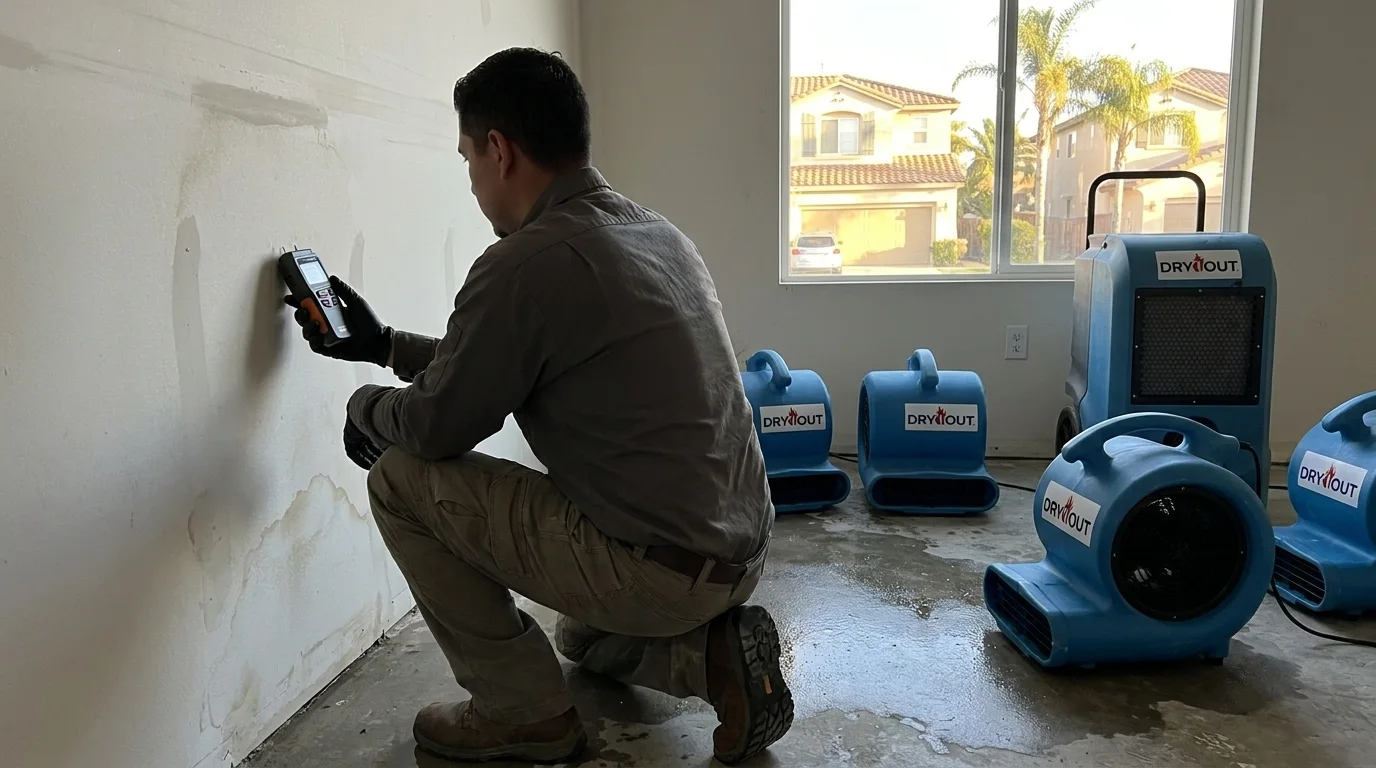
We start with extraction, pulling standing water off hardwood, tile, and subfloor before it has a chance to wick into baseboards and plaster walls common in Victorian and Edwardian homes around Pacific Heights and Noe Valley. Moisture mapping comes next: thermal imaging and penetrating meters tell us what’s wet behind the surface, which matters more in older construction where lath-and-plaster holds water differently than modern drywall. From there we set structural drying equipment, air movers and refrigerant dehumidifiers, calibrated to the specific conditions of the building rather than a generic drying chart. In raised-foundation homes we often need to dry the crawlspace itself, not just the living area above it, since trapped ground moisture under the house can re-wet a floor assembly days after it reads dry on top. Drying is tracked and documented against the IICRC S500 standard until moisture content in framing and subfloor returns to a stable baseline, not just until the carpet feels dry underfoot.
San Francisco Insurance & HOA Coordination
A lot of San Francisco housing is held as tenancy-in-common or sits inside HOA-managed condo buildings, particularly in SoMa and parts of the Mission, and a single water loss can touch common areas, shared plumbing chases, or a neighboring unit. We document the source and extent of the loss with photos and moisture readings that can be shared with your carrier, the building’s HOA, and, when a unit below or beside yours is affected, the other owner’s insurer. San Francisco’s sewer lateral requirements, tied to property transfers and enforced through the city’s Public Works and utilities process, sometimes surface during a water loss investigation if an underground line is implicated, and we flag that early so it doesn’t stall your claim. We’re licensed (##993442) and work directly with most major carriers so the paperwork doesn’t become a second job on top of the damage itself.
Local note
Homes near Golden Gate Park in the Sunset and Richmond districts (94122, 94121) sit in San Francisco’s fog belt, where outdoor relative humidity routinely runs high even when the sky looks clear. Standard drying setpoints built for drier regions of the state don’t translate well here, since the outside air is already close to saturated and won’t pull moisture out of a dehumidifier’s exhaust the way it would inland. We adjust equipment placement and run times for these addresses specifically, rather than applying a one-size drying protocol across the city.
Whether it’s a slow leak under a Mission District kitchen or a failed supply line in a Noe Valley Victorian, water damage restoration in San Francisco moves faster and dries more completely when the crew understands the building type before they ever pull out a moisture meter. Dry 1 Out Restoration and Construction is IICRC certified in water and structural drying and available 24/7, call (888) 379-1688 to get extraction and drying started.
Serving San Francisco from our Vista headquarters — ★ 5.0 · 18 Google reviews
“As good as it gets… fast, friendly put my mind to ease…” — Doug, September 2026Read our reviews on Google →
Water Damage Restoration in San Francisco: Service Coverage
Frequently Asked Questions
How fast can you arrive for water damage restoration in San Francisco?
How does fog-belt humidity in the Sunset and Richmond districts affect drying times?
Do San Francisco's older Victorian and Edwardian homes need special handling during water extraction?
Can a water loss in a SoMa condo affect neighboring units or common areas?
What equipment do you use for structural drying in San Francisco homes?
Does San Francisco's sewer lateral requirement ever come up during a water damage claim?
Will my homeowners insurance cover water damage restoration in San Francisco?
Water Damage Restoration response in San Francisco
Most San Francisco calls see a technician on-site within 60 minutes from our Vista headquarters.