24/7 Emergency Smoke Damage Restoration in Santa Cruz
24/7 emergency smoke damage restoration in Santa Cruz, CA. IICRC-certified, insurance billing accepted. Call (888) 379-1688.
Our IICRC-certified technicians are dispatched from our Vista, CA headquarters and are typically on-site in Santa Cruz within 60 minutes of your call.
Smoke damage emergency in Santa Cruz? We answer 24/7 and send an IICRC-trained crew to assess soot penetration before it sets permanently into plaster, redwood trim, and the coastal humidity makes residue cleanup harder by the hour. Wildfire smoke drifting in from the surrounding hills behaves differently than a kitchen fire or chimney flare-up, and homes from Westside to Seabright each hold odor and soot in their own way depending on construction era and how long windows stayed open during the event.
Why Santa Cruz Properties See Smoke Damage Issues
Santa Cruz sits in a wildfire interface zone, and when fires burn in the surrounding redwood canyons or further inland, prevailing onshore winds carry fine particulate smoke into neighborhoods for days at a time, even when no structure in the area actually catches fire. That smoke settles into stucco, attic insulation, and HVAC systems across Eastside and Downtown Santa Cruz alike. Add the marine layer that rolls in most mornings, and soot particles that would stay dry and brushable in a desert climate instead bind to surfaces with condensation, turning a light film into a tacky residue that’s harder to lift without specialized solvents. Homes closer to the coast, including parts of Beach Flats and the blocks near Santa Cruz Wharf, deal with this combination of salt air and smoke exposure more than most inland California towns.
Our Smoke Damage Restoration Process in Santa Cruz
We start with a walkthrough to separate dry smoke residue (from fast-burning fires, which brushes off more easily) from wet smoke residue (from smoldering fires, which smears and penetrates porous material). From there we seal off unaffected rooms, run HEPA air scrubbers to pull particulate out of circulation, and work room by room: hard surfaces get wiped with appropriate cleaning agents, soft goods get assessed for salvage versus disposal, and HVAC ductwork gets inspected since a running furnace or heat pump will redistribute soot through the whole house within hours of a fire event. Odor neutralization comes last, often with thermal fogging or ozone treatment in unoccupied spaces, matched to the type of smoke involved rather than a one-size approach.
Equipment & Methods We Use for Smoke Residue Cleanup
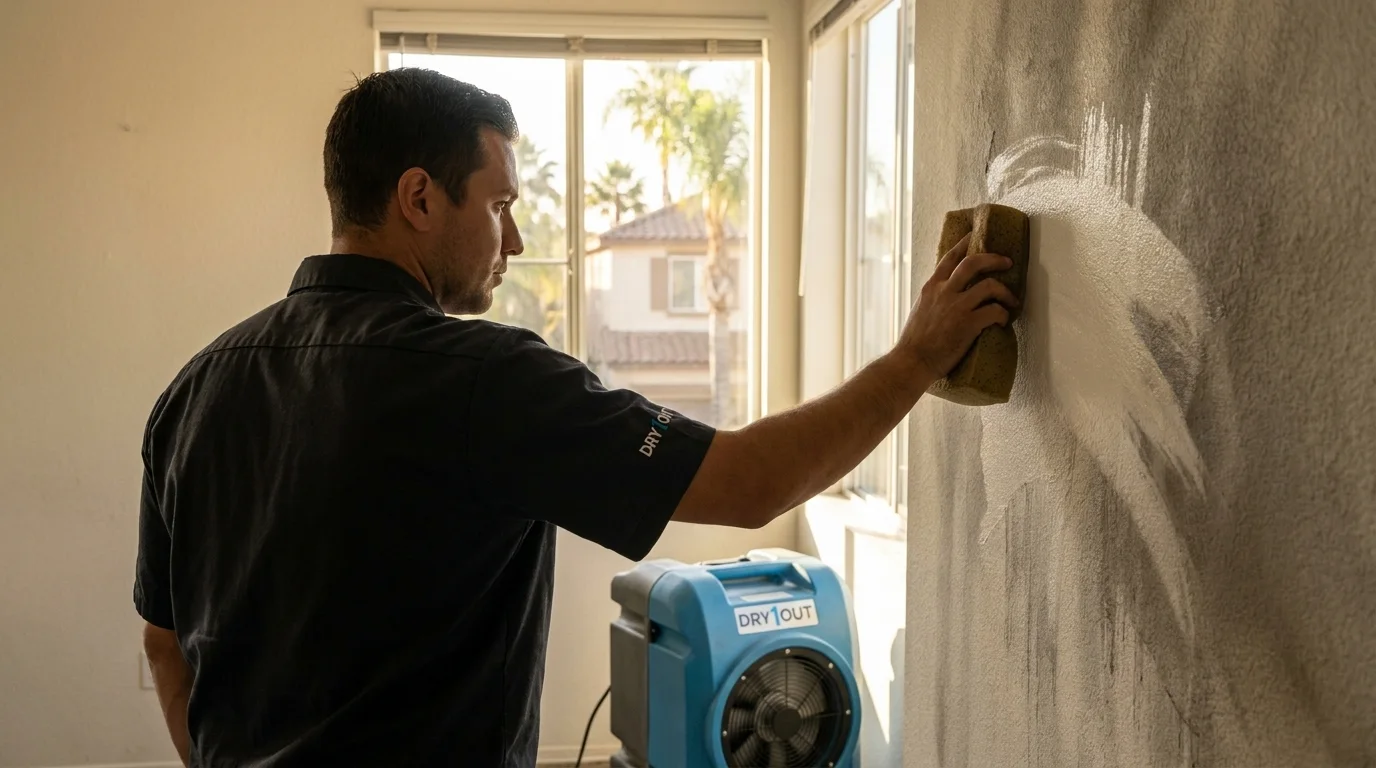
Dry sponges and chemical sponges handle light soot on walls and ceilings without smearing it deeper into texture or paint. For protein residue from a kitchen fire, which leaves an almost invisible but pungent film on cabinetry, we use degreasing agents built for that specific chemistry rather than an all-purpose cleaner that just moves the smell around. Fabric and upholstery go through either on-site extraction or off-site ultrasonic cleaning depending on the material, and we test a hidden section first since older homes in this area sometimes have fabric or finishes that react poorly to standard solvents.
Santa Cruz Insurance & HOA Coordination
Most homeowner policies cover smoke and soot damage following a covered fire event, including nearby wildfire smoke infiltration in many cases, but documentation matters. We photograph affected materials room by room and provide a written scope before work begins so the claim has a clear paper trail. For condo and townhome owners in HOA-managed buildings around Downtown Santa Cruz, we coordinate with property management on shared-wall access and common-area ventilation before starting work, since smoke from one unit’s fire can travel into adjoining units through shared attic space or ductwork.
Local note
One thing that catches outside crews off guard here: Santa Cruz’s winter storm season and near-constant coastal humidity mean smoke odor that would normally fade on its own in a dry inland climate instead lingers and re-activates on foggy mornings, because moisture in the air reconstitutes the oily residue left behind. We factor that into the drying and sealing stage of every job in the 95060 area and beyond, running dehumidification alongside odor treatment rather than treating them as separate steps.
If smoke has moved through your home or business near UC Santa Cruz, the Boardwalk area, or anywhere else in the city, call (888) 379-1688. We’re licensed under contractor license ##993442 and staffed around the clock to start the assessment and get ahead of the residue before it sets permanently.
Serving Santa Cruz from our Vista headquarters — ★ 5.0 · 18 Google reviews
“Alberto and dry out did a great job responding quickly and professionally will be using them again!” — Joseph, September 2026Read our reviews on Google →
Smoke Damage Restoration in Santa Cruz: Service Coverage
Frequently Asked Questions
How fast can you arrive for smoke damage restoration in Santa Cruz?
How does Santa Cruz's coastal fog affect smoke residue cleanup?
Do HOA buildings near Downtown Santa Cruz require special coordination for smoke cleanup?
Are Beach Flats and Seabright homes more exposed to wildfire smoke drift?
What's the difference between dry smoke and wet smoke cleanup?
Will my homeowner's insurance cover smoke damage from a nearby wildfire in Santa Cruz?
Smoke Damage Restoration response in Santa Cruz
Most Santa Cruz calls see a technician on-site within 60 minutes from our Vista headquarters.
Nearby & Related
- 24/7 Emergency Smoke Damage Restoration in Vista
- Restoration Services in Santa Cruz
- 24/7 Emergency Fire Damage Restoration in Santa Cruz
- Mold Remediation in Santa Cruz
- 24/7 Emergency Smoke Damage Restoration in El Cajon
- 24/7 Emergency Smoke Damage Restoration in Escondido
- Contact Dry 1 Out Restoration and Construction