If you’re searching for this, you’ve probably already had a bad experience, or you’re trying to avoid one. The short version: verify the contractor is licensed with the California Contractors State License Board, get the scope of work in writing before any demolition starts, confirm who is billing your insurance carrier and how, and never sign a document that gives a company blanket authority to make decisions on your behalf. A legitimate restoration company will walk you through all of this without pressure. One that won’t is the one to avoid.
Vista sits in that stretch of North San Diego County where two very different disasters show up on the same street: wind-driven wildfire smoke drifting down from the back country, and winter atmospheric river storms that overwhelm aging drainage in older neighborhoods near Buena Vista Creek. Both bring a wave of restoration companies into town, some local and established, some that showed up with the storm and will be gone before the warranty period matters.
Why This Decision Gets Rushed (and Why That’s the Problem)
Water and fire damage don’t wait for you to do research. A slab leak under a 1970s Vista ranch house can soak flooring and baseboards within hours. Smoke odor settles into drywall and HVAC ductwork fast enough that every day you wait makes the eventual cleanup bigger. That urgency is real, and it’s also exactly what a bad actor relies on. The pressure to “sign now so we can start today” is a sales tactic, not a technical requirement. A company that knows what it’s doing can explain the timeline and still get a moisture meter in your house within the hour.
The other pressure point is insurance. Homeowners often assume any contractor who says “we work with your insurance” is vetted or endorsed by the carrier. That’s not how it works. Insurers don’t certify specific contractors; they just pay claims according to policy language and documented scope. A restoration company’s job is to document the loss accurately (photos, moisture readings, affected material lists) so your claim holds up, not to promise a number before they’ve even opened a wall.
Questions to Ask Before You Sign Anything
- Are you licensed with the CSLB, and can I see the number? California requires a contractor’s license for most structural repair work. You can look up any license number on the CSLB website in under a minute, so there’s no reason not to ask.
- Will you give me a written scope of work before demolition starts? This should list what’s being removed, why, and what the drying or repair plan looks like. Verbal promises don’t help you later if there’s a dispute with the carrier.
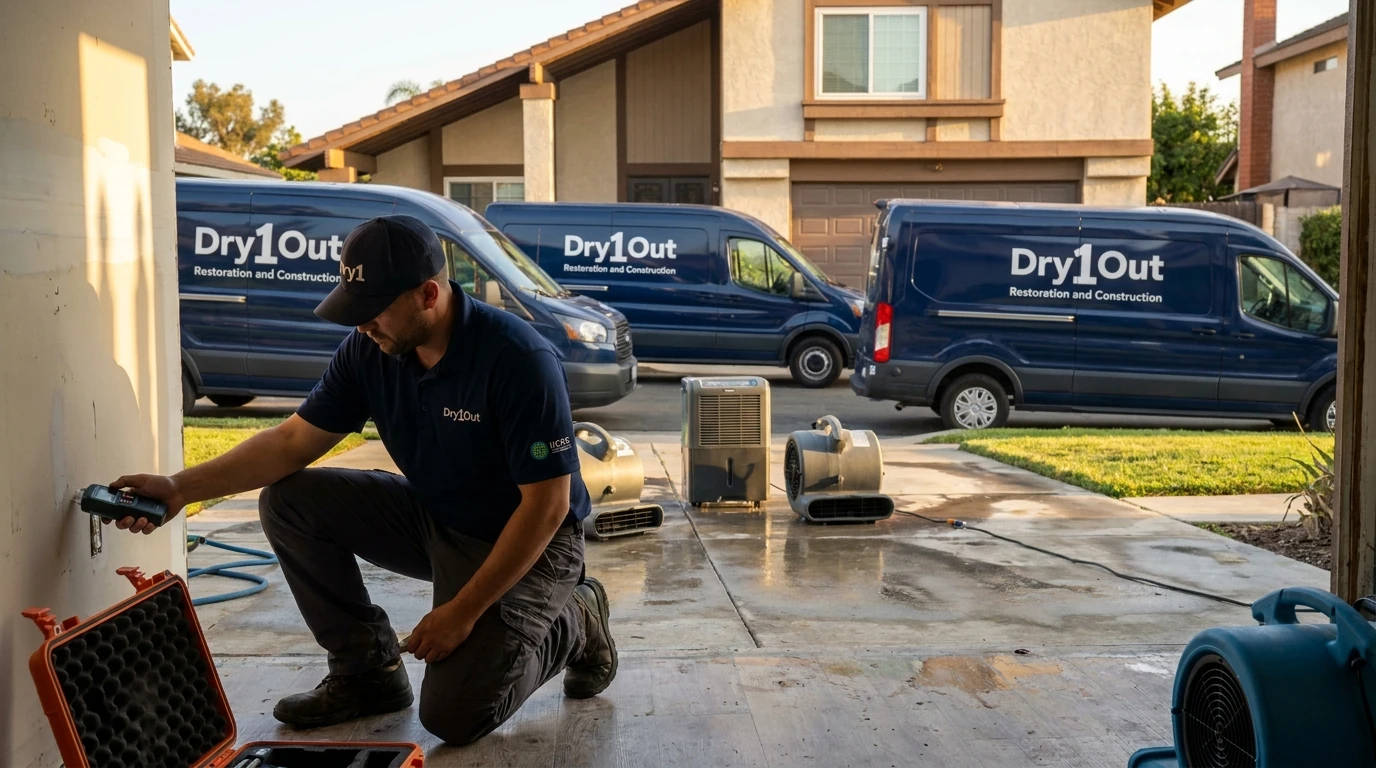
- How do you measure moisture, and will I see the readings? Ask whether they use moisture meters and document drying progress over multiple visits, not just a single reading on day one. Materials that look dry on the surface can still be wet underneath, particularly plaster, subfloor, and double-layer drywall.
- Do you subcontract the work, and to whom? Some companies that answer the phone are brokers who hand the actual labor to a rotating list of subcontractors. That’s not automatically bad, but you should know who is physically in your house.
- What happens if the insurance adjuster’s estimate doesn’t match your scope? A straight answer here (how disagreements get resolved, who documents the difference) tells you more about the company than almost anything else.
What NOT to Do
- Don’t sign a “certificate of satisfaction” or final payment authorization before work is actually complete. Some documents are worded to release the contractor from further obligation even if drying or repairs aren’t finished.
- Don’t accept a cash-only or no-paperwork arrangement, even if it’s pitched as faster or cheaper. Without documentation, you have nothing to show the insurance company or a future buyer if the issue resurfaces.
- Don’t let anyone seal up walls or flooring before moisture readings confirm the structure is actually dry. Closing up a wet wall cavity is one of the most common ways mold problems get created after a water event, not before it.
- Don’t assume a low bid means a better deal. Underbidding to win the job and then discovering “additional damage” once demolition starts is a pattern worth asking about directly: “How often do your final invoices differ from your initial estimate, and why?”
- Don’t ignore odor as just an inconvenience. Persistent musty or smoky smell after cleanup usually means something was missed, not that you need to get used to it.
When to Call a Professional
Some situations are manageable with a mop and a fan. Others aren’t, and the line is usually about what you can’t see. If water has been sitting for more than 24 to 48 hours, if it touched drywall, insulation, or subfloor, or if you can smell a musty note that wasn’t there before, that’s a water damage restoration situation, not a DIY one. Mold can begin colonizing damp material within that same 24 to 48 hour window, so the decision to call usually needs to happen the same day you find the problem, not after you’ve tried a dehumidifier for a week.
Fire and smoke damage almost always call for professional assessment even when the visible burn area is small. Smoke residue is acidic and corrosive, and it travels through HVAC systems into rooms that never saw flame. A fire damage restoration crew will typically test surfaces and ductwork before deciding what can be cleaned versus what needs to be removed, which is a judgment call that’s hard to make correctly without experience reading soot patterns.
Mold is the trickiest of the three to self-diagnose. A visible patch the size of a dinner plate can mean a hidden colony three times that size inside a wall cavity. If you’re seeing recurring staining, smelling mustiness that returns after cleaning, or dealing with unexplained allergy symptoms that improve when you leave the house, it’s worth having a mold remediation assessment rather than guessing with bleach and a rag.
What the Recovery Process Should Actually Look Like
A sound process follows a sequence, not a rush. First comes assessment: moisture mapping, photo documentation, and an itemized scope of affected materials. Then mitigation, removing standing water or damaged materials that can’t be saved, setting up drying equipment, and monitoring moisture levels over several days rather than one visit. Drying follows a recognized framework (the IICRC S500 standard is the common industry reference point for water damage drying) that calls for repeat moisture checks before any rebuild begins. Only after materials test dry does reconstruction start, whether that’s replacing drywall, flooring, or trim.
Throughout that process, you should be getting documentation you can hand to your insurance adjuster: photos, moisture logs, material inventories. If a company can’t produce that paperwork when asked, that’s a signal worth paying attention to before the job is finished, not after.
If you’re dealing with an active leak, fire damage, or a mold concern in Vista right now, it’s worth getting a second set of eyes on it before you commit to anyone. Dry 1 Out Restoration and Construction can walk through the assessment step with you and explain what the scope should look like before any demolition starts. Call (888) 379-1688 to talk through what you’re seeing.