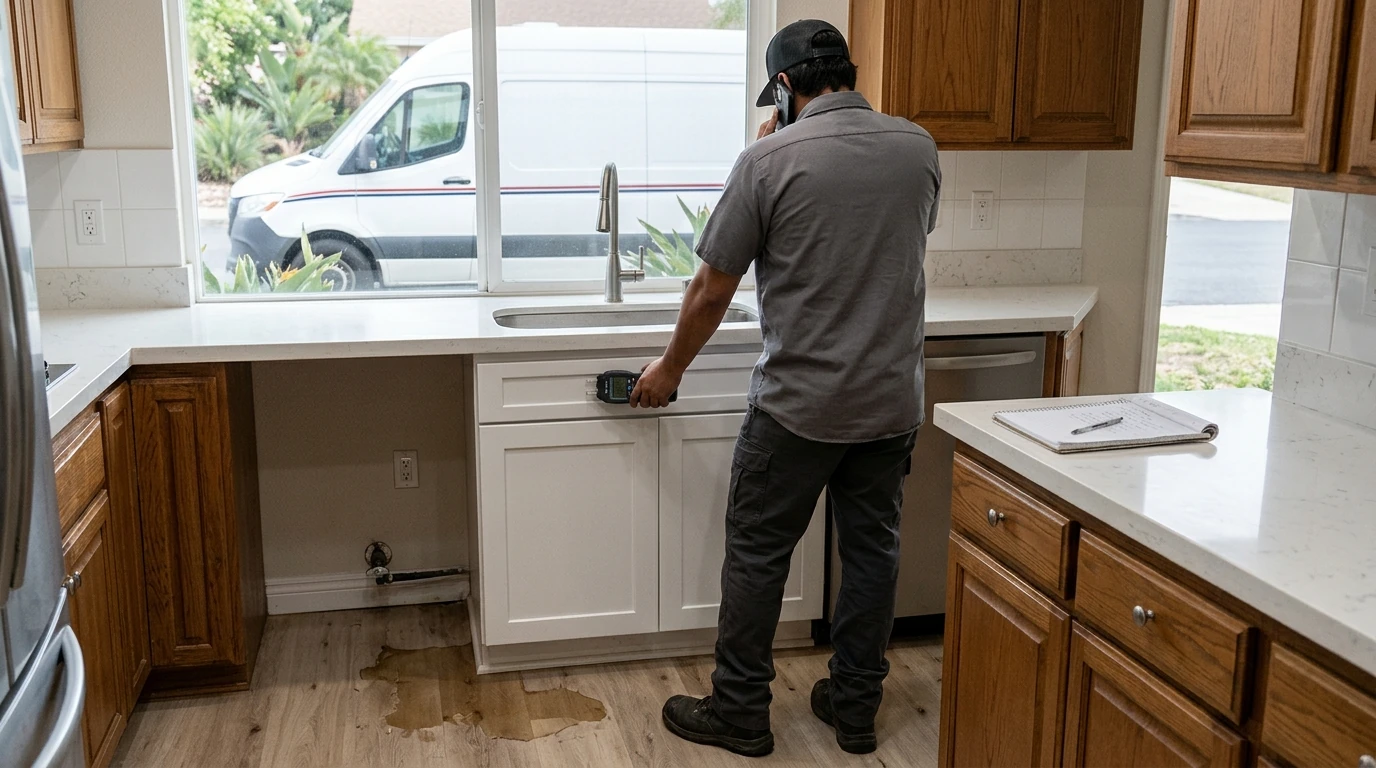
If a pipe just burst in your Shadowridge kitchen or you’re standing in standing water in a Downtown Vista rental, call Dry 1 Out Restoration and Construction at (888) 379-1688. The company is an IICRC Certified Firm and answers calls 24/7, so a water damage crew can get started on extraction and drying right after you hang up. The rest of this guide covers how to triage the call before you dial, and what actually happens once a crew is on the way.
Should I call a restoration company or a plumber first?
Call a plumber first only if water is still actively flowing and you cannot shut it off yourself. If the source is stopped, or a restoration crew can stop it for you, call the restoration company directly.
A licensed plumber is the right call when the problem is mechanical and ongoing: a water heater that won’t stop discharging, a slab leak you can’t locate, a main line that’s still running. Restoration companies handle the aftermath, extraction, structural drying, and repair, not the plumbing fix itself, though many (including Dry 1 Out) also do general contracting and reconstruction once the water’s gone.
Most Vista calls don’t need a plumber at all. A burst supply line under a sink, a failed washing machine hose, an overflowing toilet, a water heater that’s already drained, these are self-contained once the shutoff valve is turned. In those cases, skip the plumber and call restoration directly so drying starts sooner.
When is it a 911 or utility call instead?
Call 911 or your utility provider first if there’s any electrical hazard or gas smell, before anyone touches standing water. Water near an outlet, a panel, or baseboard heaters is a shock risk that outranks everything else.
If you smell gas, leave the property and call the gas company or 911 from outside. If water is rising from a sewer backup (Category 3, grossly contaminated water) rather than a clean supply line, stay out of the affected rooms and avoid any contact until a crew arrives in PPE. Bloodborne pathogens and contaminated-water precautions are a real concern with any sewage-related flooding, not just a comfort issue.
What should I have ready when I call?
Have the water source (if known), the affected rooms, and your insurance information ready; the dispatcher will use this to send the right crew size and equipment on the first trip.
A few specifics speed things up:
- Where the water is coming from. A supply line, an appliance, a roof leak, or unknown.
- How long it’s been wet. Hours matter for drying timelines; mold can begin growing on wet materials within 24 to 48 hours, per the EPA.
- Which rooms and floors are affected, including anything below the leak.
- Whether the water has stopped. If not, and you can’t stop it, say so, that may change the response order.
- Your insurance carrier, if you’re planning to file a claim. Most policies cover sudden, accidental water damage like a burst pipe, but not gradual leaks or unendorsed sewer backups, so documenting the loss correctly from the first call protects the claim. See what standard homeowners insurance typically covers before you talk to your adjuster.
Take photos of standing water and visibly damaged materials before anyone moves anything, if it’s safe to do so. That documentation becomes part of the claim file later.
What happens after I call?
A dispatcher takes the details above, and a technician is sent to assess the loss, extract standing water, and set containment and drying equipment the same visit in most cases.
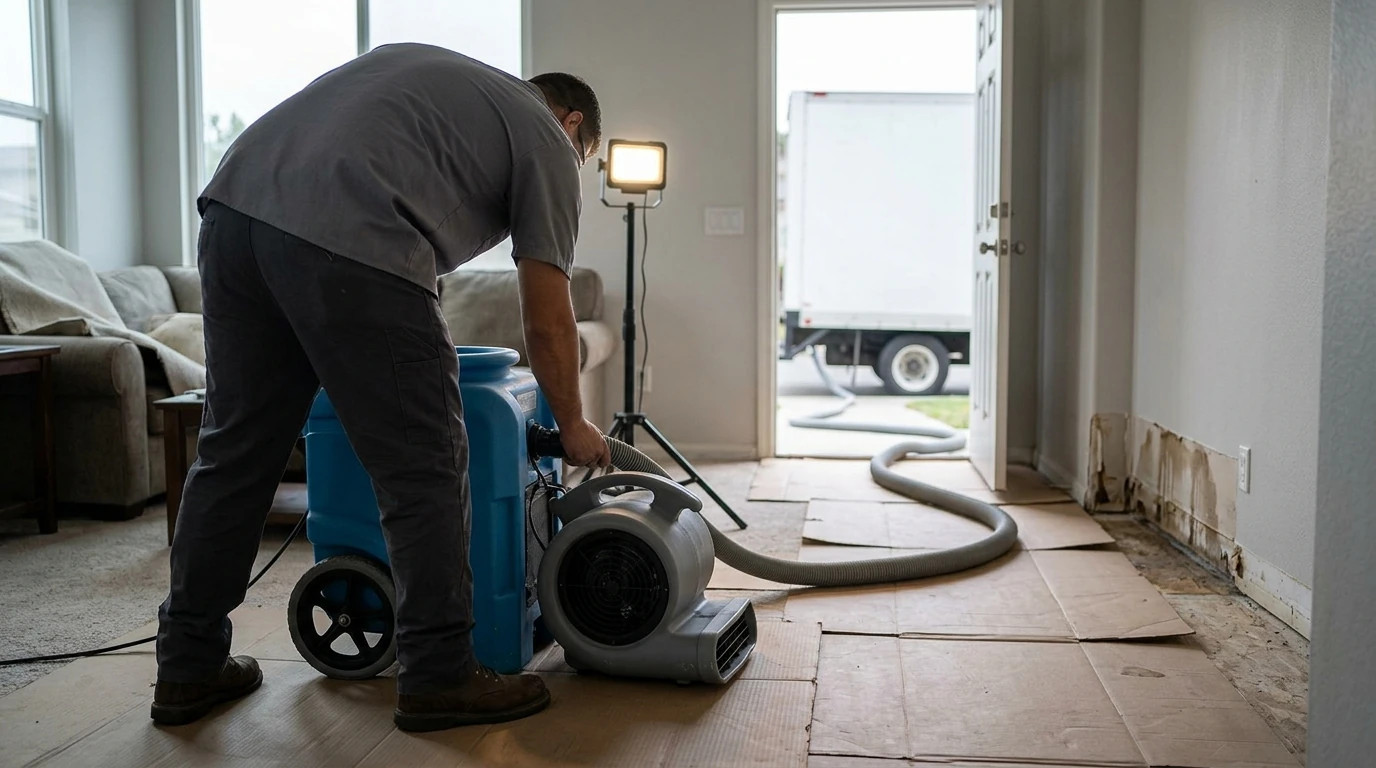
On arrival, the technician checks the water category (clean, gray, or black water under the IICRC S500 standard) and the extent of the loss, then starts extraction with truck-mounted or portable equipment. Air movers and a dehumidifier go in next to begin structural drying. Saturated carpet pad, baseboards, or drywall that can’t dry in place usually come out at this stage rather than later, which shortens the overall timeline.
If you’re filing a claim, ask for a written scope of work and daily drying logs. Insurers typically want documentation that the loss was mitigated promptly, and a dated moisture log does that. If you haven’t worked through the first-day steps yet, what to do in the first 24 hours after water damage covers the order of operations before a crew even arrives.
For the full breakdown of services and coverage area, see water damage restoration.
Water damage doesn’t wait for business hours, and neither should the first call. Call Dry 1 Out at (888) 379-1688 for water damage restoration anywhere in Vista or North San Diego County.
About Dry 1 Out Restoration and Construction
Dry 1 Out Restoration and Construction is an IICRC Certified Firm licensed in California (#993442), based in Vista with a second office in Hayward. Crews hold IICRC Water Restoration Technician (WRT) and Applied Structural Drying (ASD) credentials and answer calls 24/7 across North San Diego County and the Bay Area, handling water damage restoration, sewage cleanup, mold remediation, fire and smoke restoration, and reconstruction.