
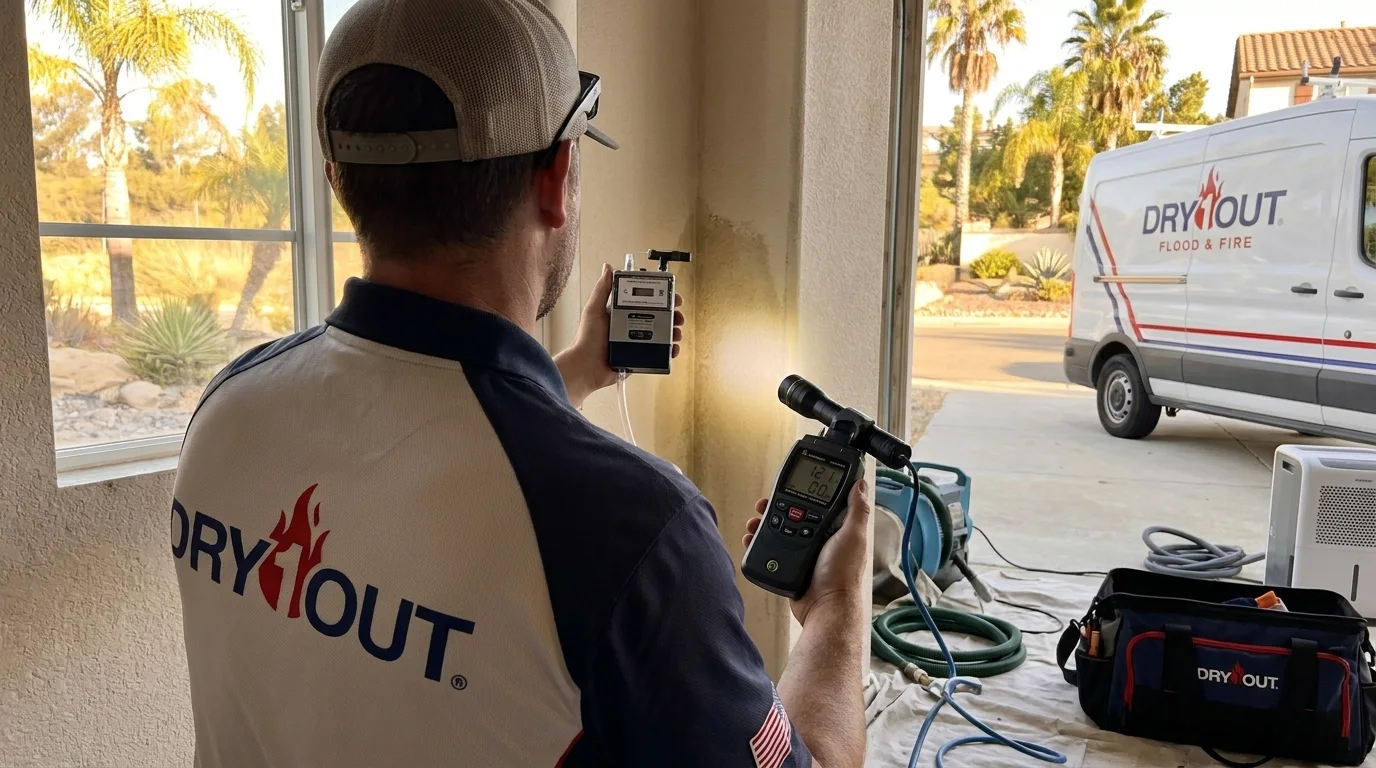
Mold Inspection and Testing in San Francisco
24/7 mold inspection and testing in San Francisco, CA. IICRC-certified, insurance billing accepted. Call (888) 379-1688.
Our IICRC-certified technicians are dispatched from our Vista, CA headquarters and are typically on-site in San Francisco within 60 minutes of your call.
San Francisco’s marine layer doesn’t just roll over Twin Peaks in the evening, it seeps into wall cavities across the Sunset and Richmond Districts and settles there for months. Mold inspection and testing in this city has to account for that fog-belt humidity as much as for any single leak, which is why a visual walk-through alone rarely tells the whole story. We combine moisture mapping with lab-analyzed air and surface samples so you get a finding you can actually act on, whether that’s for a health concern, a real estate transaction, or a dispute with an HOA board.
Why San Francisco Properties See Mold Issues
A lot of San Francisco’s housing stock predates modern vapor barriers and mechanical ventilation. Victorians and Edwardians in Noe Valley and Pacific Heights often have minimal attic airflow and crawlspaces that stay damp well into summer because the fog never fully burns off in those pockets of the city. In the Sunset and Richmond Districts, homes sit closer to the coastal fog belt itself, and we routinely find elevated moisture readings in exterior-wall insulation even when there’s no obvious plumbing failure. Add in the stucco-over-wood-frame construction common in the Mission District and Bernal Heights, and you get a building envelope that can trap condensation behind an otherwise sound-looking wall for a long time before anyone notices a smell or a stain.
SoMa and other dense mixed-use corridors bring a different variable: converted live-work units and ground-floor residential spaces built near grade, where rising damp and poor slab ventilation can feed mold growth in baseboards and lower drywall sections. None of these patterns mean every home has a problem, but they do mean an inspection here benefits from someone who already expects to find moisture in places a drier climate wouldn’t produce it.
Our Mold Inspection and Testing Process in San Francisco
We start with a visual assessment of the areas you’re concerned about, plus adjacent spaces that commonly hide problems in this climate: attic framing, crawlspace sill plates, and the wall cavities around older single-pane windows where condensation collects. From there we use moisture meters and, where useful, thermal imaging to find damp material that isn’t visible yet. If conditions warrant it, we collect air samples to measure spore counts against an outdoor control sample, and surface or tape-lift samples from any suspect growth. Everything goes to an independent lab, and our AMRT-certified technician interprets the results in a written report that explains what was found, where, and what it means for next steps. We don’t perform the inspection and then sell you the remediation decision in the same breath, the report stands on its own.
San Francisco Insurance & HOA Coordination
A fair number of our inspection calls in this city come from condo owners and HOA boards in SoMa and Pacific Heights buildings where a mold finding in one unit raises questions about shared walls or ventilation systems. We document conditions thoroughly enough to support an HOA’s decision-making or a homeowner’s insurance claim, including photos, moisture readings, and lab results tied to specific locations in the unit. If your HOA requires a third-party assessment before authorizing remediation work or releasing reserve funds, our report is written to stand up to that kind of review.
Local note
In Sunset District and Richmond District homes built before the 1960s, we frequently see mold concentrated at the base of exterior walls facing the ocean side of the house, not because of a leak, but because that orientation catches the heaviest fog-driven moisture over the course of a year. When we test one of these properties, we make it a point to sample that ocean-facing wall separately from the rest of the house rather than relying on a single average reading, because the two can tell very different stories.
If you’re noticing a musty smell near a window in Noe Valley, water stains in a Mission District basement, or just want a clear answer before closing on a home near Golden Gate Park, mold inspection and testing gives you facts instead of guesswork. Call Dry 1 Out Restoration and Construction at (888) 379-1688 to schedule an assessment, and bring your questions about ZIP codes like 94122 or 94118, where fog-belt conditions tend to shape what we find.
Serving San Francisco from our Vista headquarters — ★ 5.0 · 18 Google reviews
“As good as it gets… fast, friendly put my mind to ease…” — Doug, September 2026Read our reviews on Google →
Mold Inspection and Testing in San Francisco: Service Coverage
Frequently Asked Questions
How fast can you arrive for mold inspection and testing in San Francisco?
Are Sunset District and Richmond District homes more prone to mold than other parts of San Francisco?
Do HOA boards in SoMa or Pacific Heights buildings require a specific type of mold report?
What's different about inspecting a pre-1950 Victorian or Edwardian home in Noe Valley or Pacific Heights?
Do you take air samples, surface samples, or both during an inspection?
How long does it take to get mold testing results back for a San Francisco property?
Will my homeowners insurance cover mold inspection and testing in San Francisco?
Mold Inspection and Testing response in San Francisco
Most San Francisco calls see a technician on-site within 60 minutes from our Vista headquarters.