Mold Inspection and Testing in Vista
24/7 mold inspection and testing in Vista and surrounding areas. IICRC-certified, insurance billing accepted. Call (888) 379-1688.
A musty smell that comes and goes with the thermostat. A water stain on the ceiling from a roof leak that got fixed last year but the drywall never got checked. A new allergy or cough that only flares up at home. These are the moments that call for mold inspection and testing, not a remediation crew, because you don’t yet know what you’re dealing with, where it’s located, or whether it’s even mold at all. Testing answers that question with data instead of guesswork.
What Mold Inspection and Testing actually involves
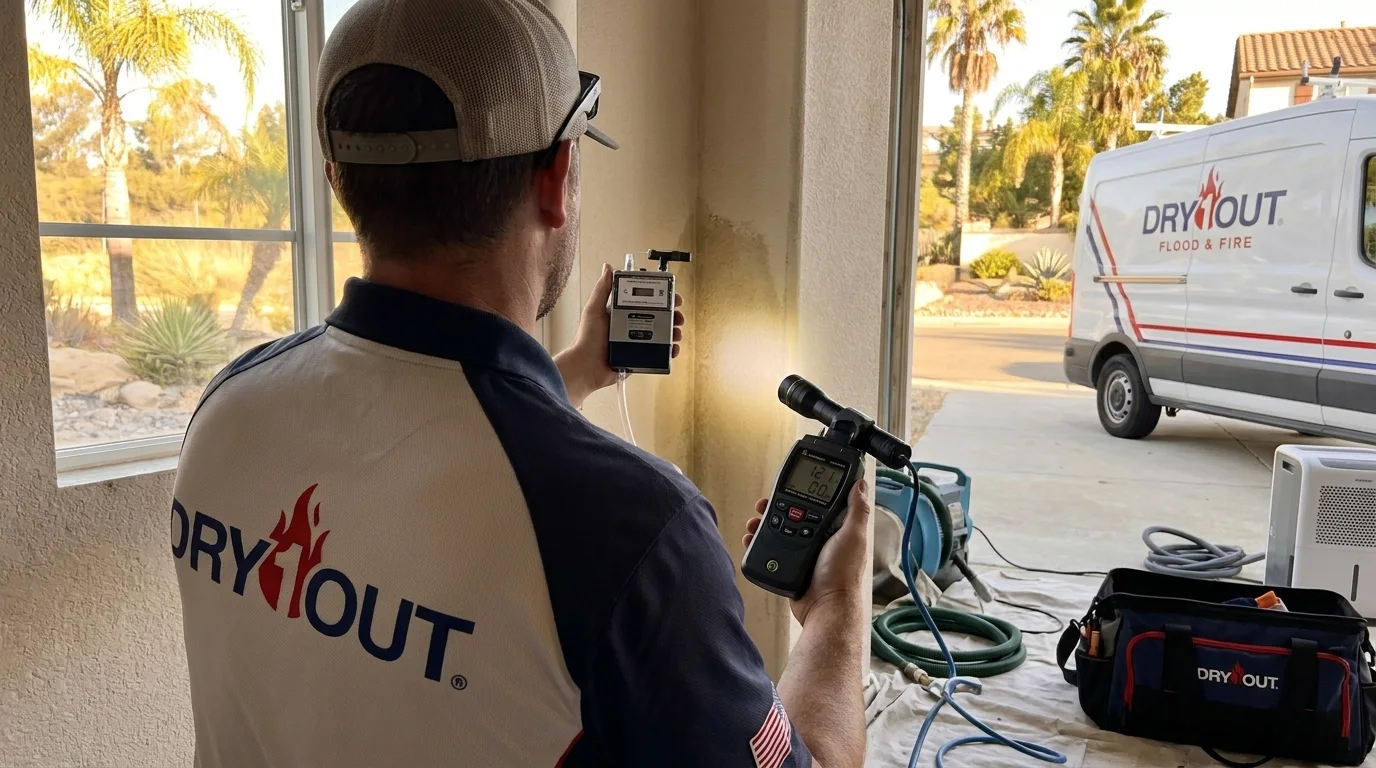
A proper mold inspection starts with a walkthrough of the property looking for moisture sources, staining, bubbled paint, and musty odor, paired with a moisture meter and often a thermal camera to find damp spots behind walls or under flooring that aren’t visible yet. From there, air sampling and sometimes surface or swab sampling get sent to a third-party laboratory for spore identification and count. A straightforward single-area inspection with air sampling can usually be completed in one visit lasting one to two hours, with lab results returned in two to five business days depending on the lab’s turnaround. Larger homes, crawlspaces, or properties with a history of water damage take longer because moisture mapping has to cover more square footage and often more than one HVAC zone.
Our process
- Visual assessment and moisture mapping. We walk the affected areas with a moisture meter and thermal imaging camera to find where water has traveled, not just where it’s visible.
- Indoor air quality testing. Spore trap air samples are collected inside the suspect area and compared against an outdoor control sample, since some level of mold spores is normal outdoor air and the comparison is what makes the indoor number meaningful.
- Surface and swab sampling. Visible growth on drywall, wood framing, or HVAC components gets a tape lift or swab sample to identify the species present, which matters for scoping the right remediation protocol later.
- Lab analysis. Samples go to an accredited third-party laboratory, not an in-house process, which keeps the results independent of whoever performs any remediation work afterward.
- Written report and recommendations. You get a document with spore counts, species identified, moisture readings, and a plain-language explanation of what it means for your home, which you can use for insurance documentation, a real estate transaction, or simply peace of mind.
What separates a good mold inspection from a bad one
The most common shortcut is skipping the outdoor control sample, which makes any indoor spore count meaningless on its own. A spore count of 2,000 spores per cubic meter could be unremarkable in a humid coastal climate or a red flag in a dry indoor environment, and without the comparison there’s no way to tell. Another mistake is relying on smell and a flashlight alone instead of a moisture meter, which misses the moisture sources hiding behind tile, under cabinet toe-kicks, or inside wall cavities where the drywall paper is the first thing to feed active growth. A good inspection also checks HVAC supply and return vents, since a system can spread spores through the whole house even when the source is contained to one room.
Insurance adjusters reviewing a mold claim generally want to see documented moisture readings tied to a specific covered event, like a burst pipe, rather than a general statement that mold is present. A lab report with sample locations, species, and spore counts carries far more weight in that conversation than a visual-only assessment, which is part of why testing exists as its own service distinct from remediation.
What does Mold Inspection and Testing cost?
Costs vary with the number of sample locations, whether air sampling or surface sampling (or both) is needed, and how large the property is. Every situation is different, and Dry 1 Out Restoration and Construction provides a written scope of the testing plan and estimated cost before any samples are collected. Homeowners insurance typically covers mold testing when it’s tied to a sudden, covered water event like a pipe burst, but it generally does not cover testing related to long-term humidity or maintenance issues.
| Scenario | Typical range |
|---|---|
| Visual inspection only, no lab samples | $150 - $400 |
| Single-area inspection with air sampling | $300 - $700 |
| Whole-home inspection with multiple air and surface samples | $600 - $1,500 |
| Pre-purchase mold inspection | $300 - $600 |
| Post-remediation clearance testing | $250 - $600 |
Seasonal & regional considerations
Vista’s marine-layer humidity and the warm, dry stretches that follow it create a push-pull environment indoors: homes that run swamp coolers or leave windows open overnight can see indoor humidity climb enough to support mold growth even without an obvious leak. Crawlspace homes, common in the area’s older housing stock, are especially prone to trapped moisture after the winter rainy months, which makes late winter and early spring a common window for inspection requests tied to musty odors that weren’t there in summer.
Service area
Dry 1 Out Restoration and Construction performs mold inspection and testing throughout Vista and nearby communities including Oceanside, Carlsbad, San Marcos, and Escondido.
If something in your home smells off, looks stained, or has you second-guessing the air you’re breathing, request an air quality test and get a lab-backed answer instead of a guess. Call (888) 379-1688 to schedule an inspection.
Services We Handle
- Mold Inspection
- Mold Inspection & Assessment
- Mold Testing
- Water Damage Mold Inspection
Frequently Asked Questions
Does homeowners insurance cover mold inspection and testing?
How is air sampling for mold different from just checking for a smell or visible growth?
How long does it take to get mold test results back?
Do I need mold testing before buying or selling a home?
What should I do while I'm waiting for mold test results?
What's the difference between mold inspection and mold remediation?
Looking for the best mold inspection and testing company in Vista?
Dry 1 Out Restoration and Construction provides licensed and insured mold inspection and testing in Vista, CA and the surrounding area, and has served local property owners since 2026. Customers rate us 5.0 out of 5 stars across 18 Google reviews. We answer calls 24/7 — call (888) 379-1688 for immediate help.
Need Mold Inspection and Testing now?
We respond 24/7 across Vista and surrounding CA cities.
Related Coverage
- Our Restoration Services
- Contact Dry 1 Out Restoration and Construction
- Restoration Services in Berkeley
- Restoration Services in Carlsbad
- Restoration Services in Chula Vista
- Restoration Services in Concord
- Restoration Services in El Cajon
- Restoration Services in Encinitas
- Restoration Services in Escondido
- Restoration Services in Fremont
- Restoration Services in Hayward
- Restoration Services in Oakland
- Restoration Services in Oceanside
- Restoration Services in San Diego
- How To Test for Mold in Your Home (DIY Kits vs a Pro Inspection)