
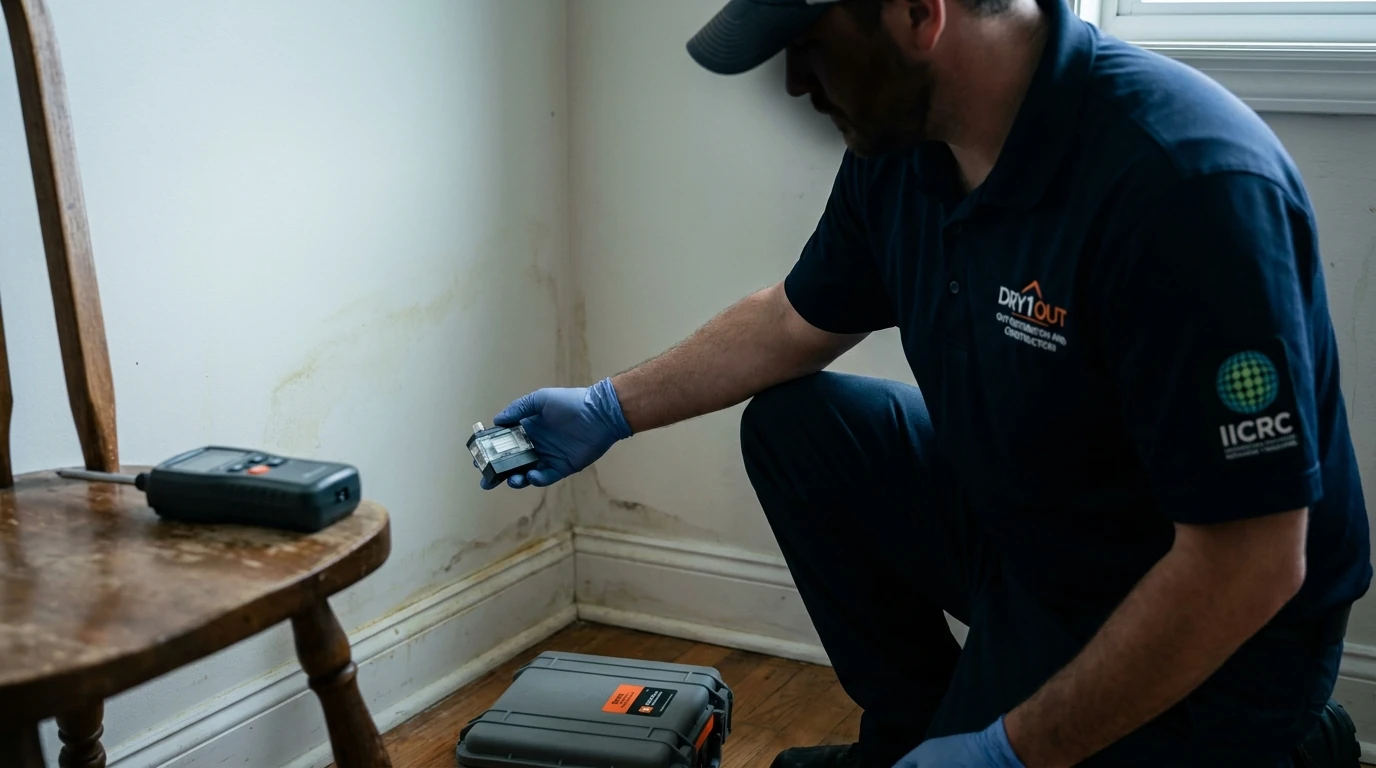
If you can see mold or smell a musty odor, you already have your answer: you have mold, and testing to confirm it is usually a waste of time and money. DIY test kits and professional inspections both have a place, but they answer different questions. A $10-30 kit from the hardware store can tell you that mold spores are present in your air, which they almost always are at some low level in every home. A professional inspection tells you what kind of mold, how much, where it’s hiding, and why it started growing in the first place, which is the information you actually need before deciding whether to remediate.
When Testing Makes Sense (and When It Doesn’t)
Skip testing and go straight to remediation if:
- You can see visible mold growth, whether it’s a small cluster on bathroom caulk or a larger patch on drywall.
- You smell a persistent musty, earthy odor in a specific room or closet.
- You’ve had recent water damage, a slow leak, or flooding and it’s been more than 24-48 hours since things got wet.
In these cases, testing just confirms what you already know and delays the actual fix. Mold remediation addresses the problem whether a lab report says “Aspergillus” or “Cladosporium.” The species rarely changes the removal process for a homeowner.
Testing is worth considering when:
- You have symptoms (coughing, headaches, allergy flare-ups) that improve when you’re away from the house, but you can’t find a visible source.
- You’re buying or selling a home and want a baseline before closing.
- You had water damage that was dried quickly and professionally, and you want to verify there’s no hidden growth before closing up walls.
- You’re dealing with a landlord or insurance dispute and need documentation.
How DIY Mold Test Kits Actually Work
Most store-bought kits fall into two categories: petri dish culture kits and air sampling kits you send to a lab.
Petri dish kits work by exposing an open dish of growth medium to the air in a room for a set period, then sealing it and waiting to see what grows. The problem is that mold spores exist in outdoor and indoor air everywhere. A petri dish left open in a perfectly healthy house will almost always grow something within a week. These kits can’t tell you whether what’s growing came from a hidden problem behind your wall or just floated in when someone opened a window.
Mail-in air sampling kits are more useful because the lab compares your indoor sample to an outdoor control sample and reports actual spore counts and types. That comparison matters: if your indoor spore count is similar to or lower than outdoor air, that’s typically normal. If indoor counts are significantly higher, or if the lab identifies species associated with water damage (like Stachybotrys), that’s a signal worth following up on.
Even the better kits have a real limitation: they test the air in one spot at one moment. Mold growing inside a wall cavity, under flooring, or above a ceiling tile may not show up in a room-air sample at all, especially if the space is sealed off.
What a Professional Mold Inspection Adds
A professional mold inspection and testing visit typically includes a visual inspection of the whole structure (not just the room you’re worried about), moisture mapping with a meter or thermal camera to find damp materials before they show visible growth, and targeted sampling, whether that’s air, surface swabs, or a cut into a suspect wall cavity.
The moisture mapping step is the part a DIY kit can’t replicate. Mold needs sustained moisture to colonize, so finding the wet material, a leaking supply line, condensation on a cold water pipe, a roof flashing failure, matters more than knowing the exact genus of mold growing on it. An inspector who finds elevated moisture in a wall but no visible growth yet is giving you a chance to fix the moisture source before remediation becomes necessary at all.
Sampling from a professional inspection is also handled with chain-of-custody documentation, which matters if you’re submitting results to an insurance carrier, a landlord, or a buyer during a real estate transaction. A lab report tied to a documented inspection carries more weight than a kit you bought and tested yourself.
Common Mistakes That Skew Either Result
A few things throw off results no matter which method you use:
- Testing right after cleaning. Bleach, disinfectant sprays, or even running an air purifier heavily right before testing can suppress spore counts and give you a false “clear” reading.
- Testing with doors and windows wide open. This mixes outdoor air into your sample and makes comparison meaningless.
- Ignoring the outdoor control sample. If you’re using a mail-in kit, always run the outdoor comparison sample exactly as instructed. Without it, your indoor number has no context.
- Assuming “black mold” is the only dangerous kind. Species identification matters less for remediation decisions than most people think. Any substantial mold growth indoors should be addressed regardless of color or genus.
- Testing instead of fixing the moisture. A clean test result today doesn’t mean much if the leak that caused the problem is still active.
What Happens After You Find Mold
Once mold is confirmed, whether by eye, by kit, or by a professional inspection, the next steps generally look like this:
- Identify and stop the moisture source. Testing or remediation without fixing the leak, condensation, or humidity problem means the mold comes back.
- Contain the affected area to keep spores from spreading to the rest of the house during removal.
- Remove and dispose of porous materials that have absorbed mold growth, drywall, insulation, carpet padding, since these generally can’t be fully cleaned.
- Clean and treat salvageable materials and structural framing.
- Dry the area completely and verify with a moisture meter before closing walls back up.
- In some cases, a post-remediation verification test confirms the space meets normal background levels before the job is considered closed.
For a small, isolated patch, some of this is manageable as a DIY project if you’re comfortable with proper containment and a respirator. For anything larger than about 10 square feet, growth inside HVAC systems, or mold tied to a flooding event, mold remediation work is safer and more thorough when handled by people who do it as a trade, partly because improper handling can spread spores into previously unaffected areas of the home.
If you’re staring at a stain, a smell, or a lab report with numbers you don’t know how to interpret, a mold inspection and testing visit from Dry 1 Out Restoration and Construction can tell you what’s actually going on in your Vista home before you spend money guessing. Call (888) 379-1688 to talk through what you’re seeing and whether testing or remediation is the right next step.