
The Short Answer
Hidden mold usually announces itself through smell, moisture, and your own physical reactions before you ever see it on a wall. A musty odor that doesn’t fade, discolored patches near windows or baseboards, peeling paint, warped flooring, condensation on cold surfaces, a spike in allergy symptoms at home, and a past water intrusion you never fully dried out are the seven most common red flags. If two or more of these sound familiar, the next step is to find the moisture source, not just the mold you can see, because mold without an active water problem behind it almost never happens on its own.
The Seven Signs, One at a Time
1. A persistent musty smell. Mold produces microbial volatile organic compounds, which is the technical name for that damp, earthy odor. If it’s strongest in one room, closet, or near a particular wall, that’s usually your best clue to where the colony is growing, even before you find visible growth.
2. Discoloration you can’t explain. Yellow-brown water rings on a ceiling, dark speckling in grout lines that reappears after cleaning, or a faint greenish tint along a baseboard are all worth a closer look. Mold doesn’t always show up black and fuzzy. Sometimes it’s just a stain that keeps coming back.
3. Peeling paint or bubbling wallpaper. Moisture trapped behind a painted or papered surface breaks down the adhesive long before mold becomes visible on top of it. If a wall section feels slightly soft or the paint has a texture like orange peel that wasn’t there before, there’s likely water intrusion behind it.
4. Warped, buckled, or soft flooring. Hardwood that cups along the seams, laminate that’s separating at the edges, or tile that sounds hollow when tapped all point to moisture underneath. In Vista’s older homes with slab foundations, this is often a sign of a slow leak from a slab plumbing line rather than surface spills.
5. Condensation that won’t stop. Windows fogging every morning, moisture beading on cold water pipes, or a bathroom mirror that stays foggy long after you’ve showered all signal high indoor humidity. Mold spores need surface moisture to colonize, and condensation gives them exactly that.
6. Unexplained allergy or respiratory symptoms at home. Sneezing, watery eyes, a cough, or sinus irritation that improves when you leave the house and returns when you’re back inside is a pattern worth paying attention to. It isn’t a diagnosis, but it’s a reason to look harder at air quality and moisture in the home.
7. A past leak, flood, or roof problem you thought was handled. Mold can begin colonizing wet drywall or framing within 24 to 48 hours. If a pipe burst, a roof leaked, or a water heater failed in the last year and the materials behind the wall were never fully dried and verified, hidden mold is a real possibility even if the surface looks fine today.
Why Vista Homes Are Prone to This
Vista sits close enough to the coast that the marine layer keeps humidity elevated on many mornings, especially from late spring through early fall, even when the afternoon feels dry. Combine that with the stucco-over-wood-frame construction common throughout North County and slab foundations in many neighborhoods, and you get two common entry points for hidden moisture: stucco cracks that let wind-driven moisture behind the exterior wall, and slab plumbing that leaks downward into the foundation before anyone notices a puddle. Homes built before the 1990s are also more likely to have original copper supply lines that have simply aged past their service life.
Immediate Steps to Take
- Identify and stop the moisture source first. If you can see or hear active water (a dripping pipe, a running toilet valve, water pooling near an appliance), shut it off at the nearest valve before doing anything else.
- Run a dehumidifier or increase ventilation in the affected room to slow further mold growth while you figure out next steps.
- Photograph everything you notice: staining, warping, bubbling paint, the musty smell’s general location. This documentation matters if you end up filing an insurance claim.
- Check your attic and crawlspace if accessible, since these are common blind spots for roof leaks and plumbing drips that never show up on a ceiling below.
- Note any recent water events, even minor ones, like a washing machine overflow or a slow roof leak during the last rain, and when they happened.
What Not to Do
- Don’t paint or caulk over a stain before the moisture source is confirmed fixed. It hides the problem without solving it, and mold will usually resurface within weeks.
- Don’t use bleach as a long-term fix on a painted or porous surface. It can whiten the surface while leaving the mold’s root structure intact underneath.
- Don’t disturb a large area of visible mold growth (more than roughly 10 square feet) without containment. Scraping, sanding, or demolishing moldy drywall without sealing off the area can spread spores through the HVAC system and into other rooms.
- Don’t assume a dry surface means a dry wall cavity. Drywall and plaster can feel bone-dry to the touch while the framing or insulation behind them is still saturated.
When to Call a Professional
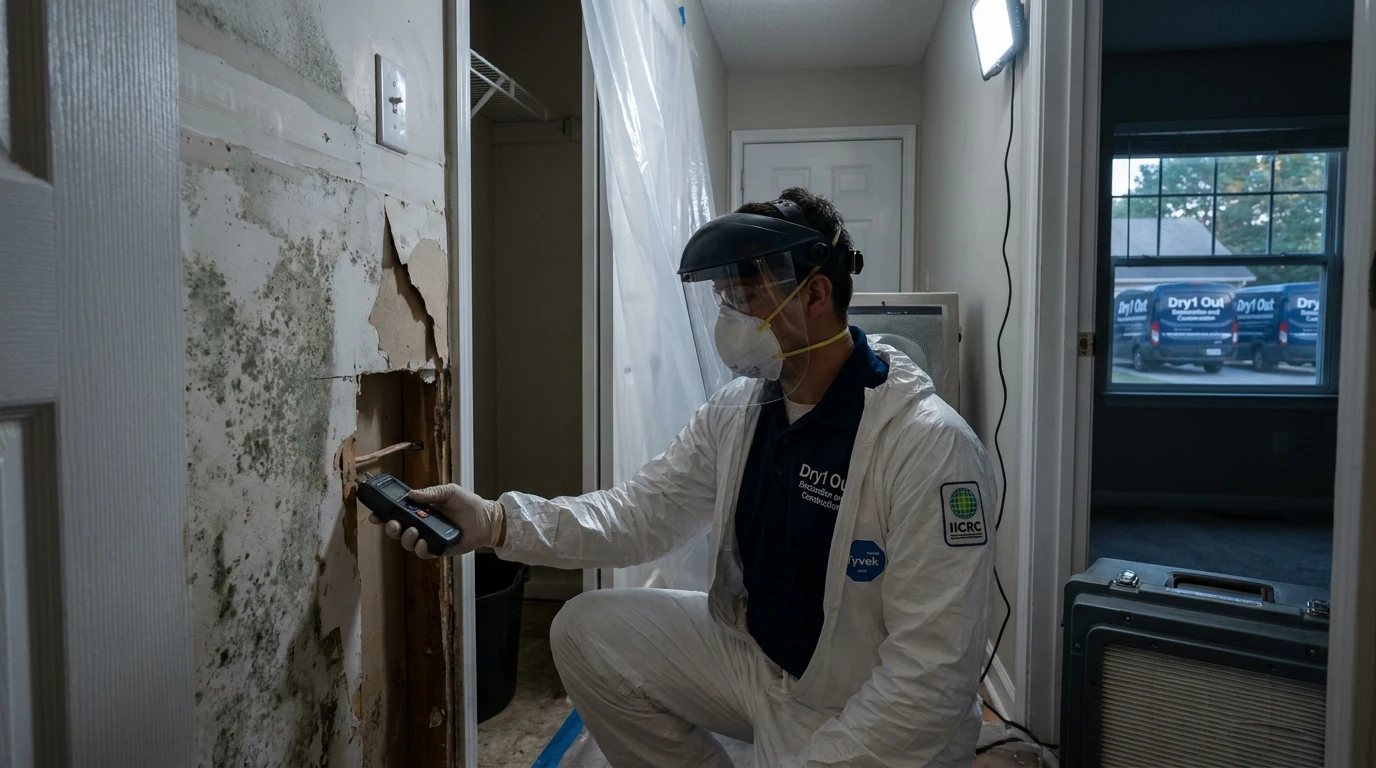
A small, isolated spot of surface mold on a bathroom tile grout line is usually a DIY cleaning job. Hidden mold tied to a plumbing leak, a roof failure, a slab leak, or anything behind a wall or under flooring is a different situation. At that point, the real question isn’t how to kill the mold you can see, it’s how far the moisture traveled and what else got wet. Dry 1 Out Restoration and Construction’s mold remediation process starts with locating the moisture source, assessing how far the affected materials extend, and setting up containment before any removal begins, so spores don’t spread to unaffected rooms during the work.
The Recovery Process
Once the moisture source is confirmed and stopped, remediation typically follows the same general sequence: contain the work area, remove materials that can’t be cleaned and dried (often porous materials like drywall or insulation), HEPA-vacuum and clean salvageable surfaces, then dry the space fully using air movers and dehumidification, monitoring moisture levels in the structure until they return to a normal range. Reconstruction, patching drywall, replacing flooring, repainting, happens only after that drying and clearance step, not before.
If you’re seeing two or more of these signs in your Vista home and you’re not sure whether it’s a quick fix or something bigger, it’s worth getting a second set of eyes on it before the problem spreads further behind your walls. Dry 1 Out Restoration and Construction can be reached at (888) 379-1688 to talk through what you’re seeing and whether an inspection makes sense.