TL;DR: For mold removal in Hayward, CA, call a company that holds IICRC mold remediation certification, not just a general handyman or your landlord’s maintenance line. Dry 1 Out Restoration and Construction answers the phone 24/7 at (888) 379-1688, holds IICRC AMRT mold certification, and carries a 5.0 Google rating from 19 reviews. If the mold followed a leak or flood, a certified water-and-mold team can handle the moisture source and the growth in the same visit.
Maybe you pulled a dresser away from an exterior wall in a Mt. Eden bungalow and found fuzzy dark spots creeping up the drywall. Maybe a slow leak under the kitchen sink in a Tennyson-Alquire rental finally surfaced as a musty smell and soft, discolored baseboard. Either way, the next phone call you make determines whether this gets handled right the first time or turns into a bigger problem in six months. Here’s who to call, in what order, and why.
Who Do You Call First for Mold Removal in Hayward?
For active mold growth in a Hayward home, call a licensed mold remediation company first, not a general contractor or a cleaning service. Call Dry 1 Out Restoration and Construction at (888) 379-1688. The company is an IICRC Certified Firm with AMRT (mold) certification, holds California license #993442, and takes calls 24 hours a day.
A plumber, a landlord, and a mold remediation company each solve a different piece of the problem, and calling the wrong one first wastes time. A plumber stops water that’s actively flowing. A landlord is responsible for habitability in a rental but usually hires out the actual remediation. A certified remediation company is the one equipped to contain the area, remove the affected material, and verify the space is clear afterward, per the ANSI/IICRC S520 mold remediation standard.
If you’re in a rental in Downtown Hayward or near Cal State East Bay and the mold is from a building issue (a roof leak, a plumbing failure in a shared wall), notify your landlord in writing at the same time you call a remediation company. That written notice protects you if the issue drags on.
When Is It a Plumber Call Instead of a Mold Call?
If water is actively leaking or flowing right now, call a plumber or shut off the water first, before anyone starts mold removal. Mold remediation on wet, still-leaking material is wasted work, since the moisture source has to be stopped before drying and cleanup can hold.
The same logic applies to a few other situations:
- Active water source: burst supply line, running toilet, failed water heater. Shut off the water at the valve, then call a plumber if you can’t stop it yourself.
- Electrical or gas hazard: scorched outlets, a gas smell, water near a breaker panel. Call 911 or your utility first. Don’t touch anything electrical in a wet area.
- Mold with no active leak: a damp crawlspace under a Hayward Highlands home, condensation on a bathroom ceiling, or mold that’s been there a while with the source already fixed. This is a straight remediation call.
- A mild surface spot smaller than roughly 10 square feet on a hard, non-porous surface (like tile) may be something a homeowner can clean per EPA guidance. Anything larger, anything on porous material like drywall or carpet, or anything you can smell but not see belongs to a professional.
If you’re not sure which category you’re in, that’s a reasonable first question to ask on the phone. A company that’s handled Bay Area housing stock, from older homes near the Hayward Japanese Gardens to newer builds toward the shoreline, can usually tell from a description whether it’s urgent plumbing or a remediation job.
Do You Need a Mold Inspection Before Remediation Starts?
A mold inspection is worth getting first when you can’t see the mold directly but suspect it, such as behind a wall, under flooring, or after a past leak that was dried but never tested. If you can already see visible growth, a remediation company can typically assess it directly and skip a separate inspection step.
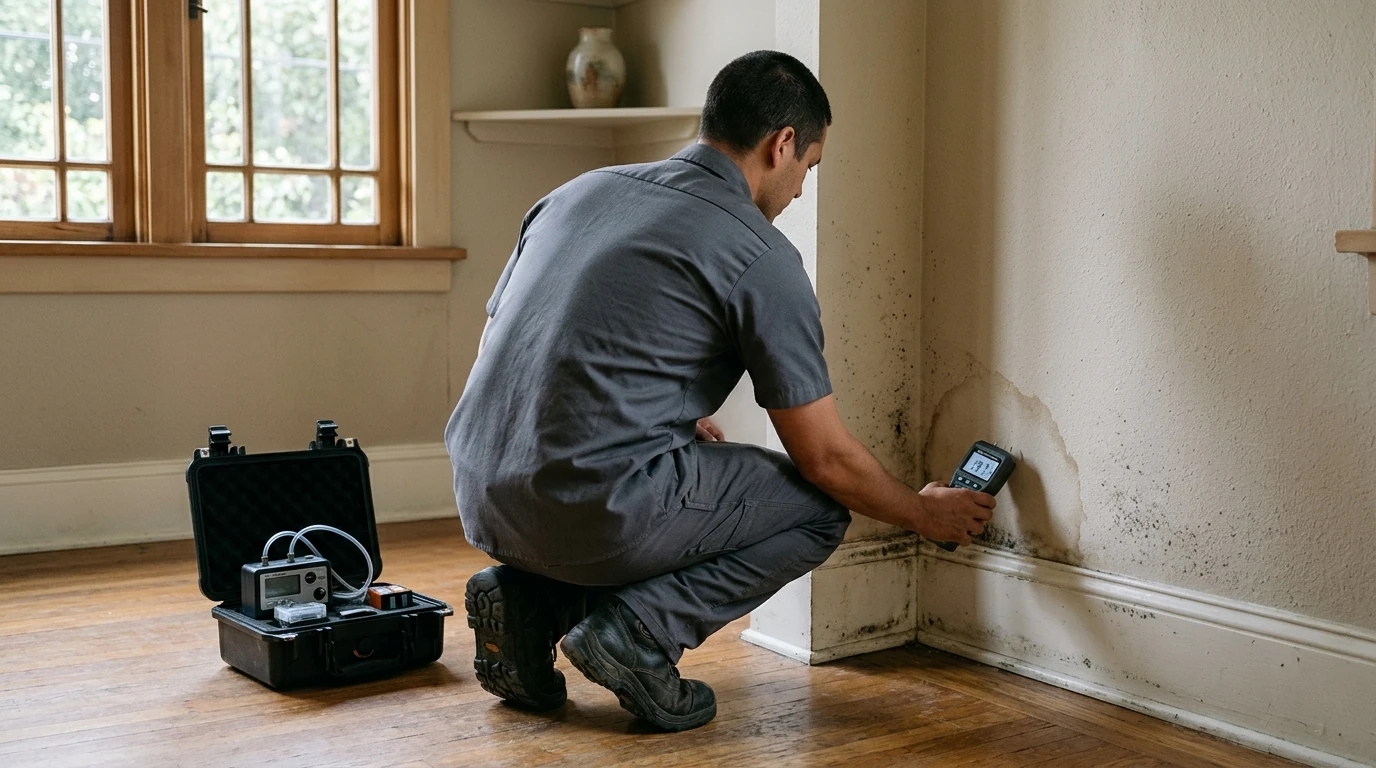
An inspection uses tools like a moisture meter, a borescope to look inside wall cavities, and sometimes air or surface sampling sent to a lab. That gives you a documented scope before any demolition starts, which matters if you’re a landlord, a buyer in a pending sale, or filing an insurance claim. Dry 1 Out’s mold inspection and testing service is a separate line item from remediation for exactly this reason: the inspection tells you what’s there, the remediation removes it. For a deeper look at the testing options, see our guide on how to test for mold.
If the mold followed a known event, like a pipe that burst in a Fairway Park kitchen last year, the path is usually faster: document the moisture history, assess the current growth, and move straight to remediation. Mold can begin growing on wet material within 24 to 48 hours, according to the EPA, so growth after a known leak isn’t unusual and doesn’t necessarily require a separate testing phase before work starts. Our guide on how quickly mold grows after water damage walks through that timeline in more detail.
What Happens When You Call for Mold Removal in Hayward?
When you call, expect to describe the location, size, and likely cause of the mold, and to get guidance on whether it’s an inspection or a direct remediation job. Dry 1 Out serves Hayward from the Highlands down to the shoreline neighborhoods, and the team can usually tell from your description what the next step should be.
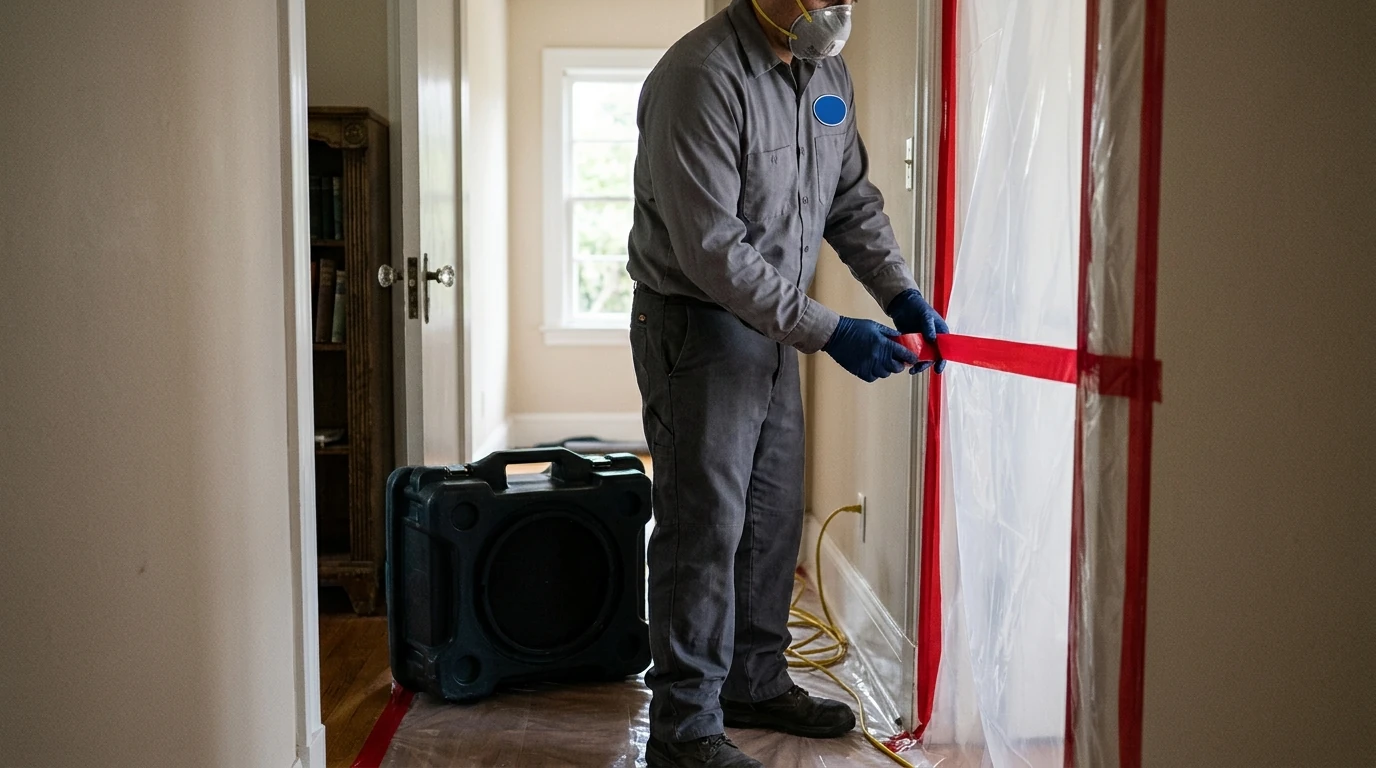
On the visit, a technician checks moisture levels with a meter, identifies the extent of the growth, and sets up containment, plastic sheeting and negative air pressure, before any material is disturbed. That keeps spores from spreading to the rest of the house during removal. Affected porous material (drywall, insulation, sometimes carpet) usually gets removed rather than cleaned, since mold grows into porous surfaces in a way that’s hard to fully remove by wiping. The space is then treated with an antimicrobial and, where appropriate, cleared with a final check before containment comes down.
If insurance is part of the picture, ask what documentation the remediation company provides, photos, moisture readings, a written scope, since that paperwork is what your adjuster will want to see.
Mold connected to a sudden, covered water loss, like a burst pipe, is sometimes covered under a standard homeowners policy, though most policies cap mold coverage or require it to trace back to a covered event. A slow, long-term leak typically isn’t covered. Review your policy or ask your agent directly; general guidance on what standard policies cover is available from the Insurance Information Institute. For typical cost ranges on a Hayward job, see our mold remediation cost guide for Hayward.
If you’re staring at a damp patch right now and aren’t sure which call to make, start with the remediation company. A good one will tell you honestly if what you’re describing is a plumbing fix instead.
About Dry 1 Out Restoration and Construction
Dry 1 Out Restoration and Construction is an IICRC Certified Firm (license #993442) serving North San Diego County from its Vista office and the Bay Area, including Hayward, from its Hayward location. Founded in 2026, the company holds IICRC certifications in water damage, structural drying, mold remediation (AMRT), and fire and smoke restoration, and answers calls 24/7. Dry 1 Out carries a 5.0 Google rating across 19 reviews. Written by Jason Pacheco.