For mold in a Vista home, call Dry 1 Out Restoration and Construction at (888) 379-1688. The company is an IICRC Certified Firm with AMRT mold remediation training on staff and answers that line 24/7. That single call is usually enough to sort out whether you need an inspector, a remediation crew, a landlord notice, or all three.
Maybe you just pulled back a soggy baseboard in a Shadowridge rental and found a gray-green film creeping up the drywall. Maybe it’s a musty smell that’s been building in a Buena Creek garage since last winter’s rain. Either way, the order you make calls in affects your health, your lease, and whether insurance ends up paying for any of it. Here’s that order.
When do you call a restoration company instead of a plumber?
Call a plumber first only if water is actively running, a pipe is actively leaking, or you can still hear water moving behind a wall. Shut off the source at the valve if you can reach it safely, then make the second call to a restoration company.
Mold can start growing on wet material within 24 to 48 hours, according to the EPA, so once the water stops, time matters more than the mold’s size. A restoration crew handles both the leftover moisture and the mold growth it caused, which is why water damage restoration and mold remediation are often booked as one visit rather than two separate companies.
If the water came from a sewer backup or a Category 3 (grossly contaminated) source, skip the plumber-only route entirely and call a restoration company first. That water carries contamination the mold crew needs to account for in the cleanup plan.
Do you need a mold inspector before remediation, or can you go straight to a remediation crew?
Small, visible patches of mold on a hard, non-porous surface can often be cleaned by the property owner without a separate inspection, while larger areas usually call for a professional assessment first. The EPA draws the line at roughly 10 square feet, about a 3-foot by 3-foot patch, as the point where a DIY wipe-down is no longer the right approach (see the EPA’s mold cleanup guidance).
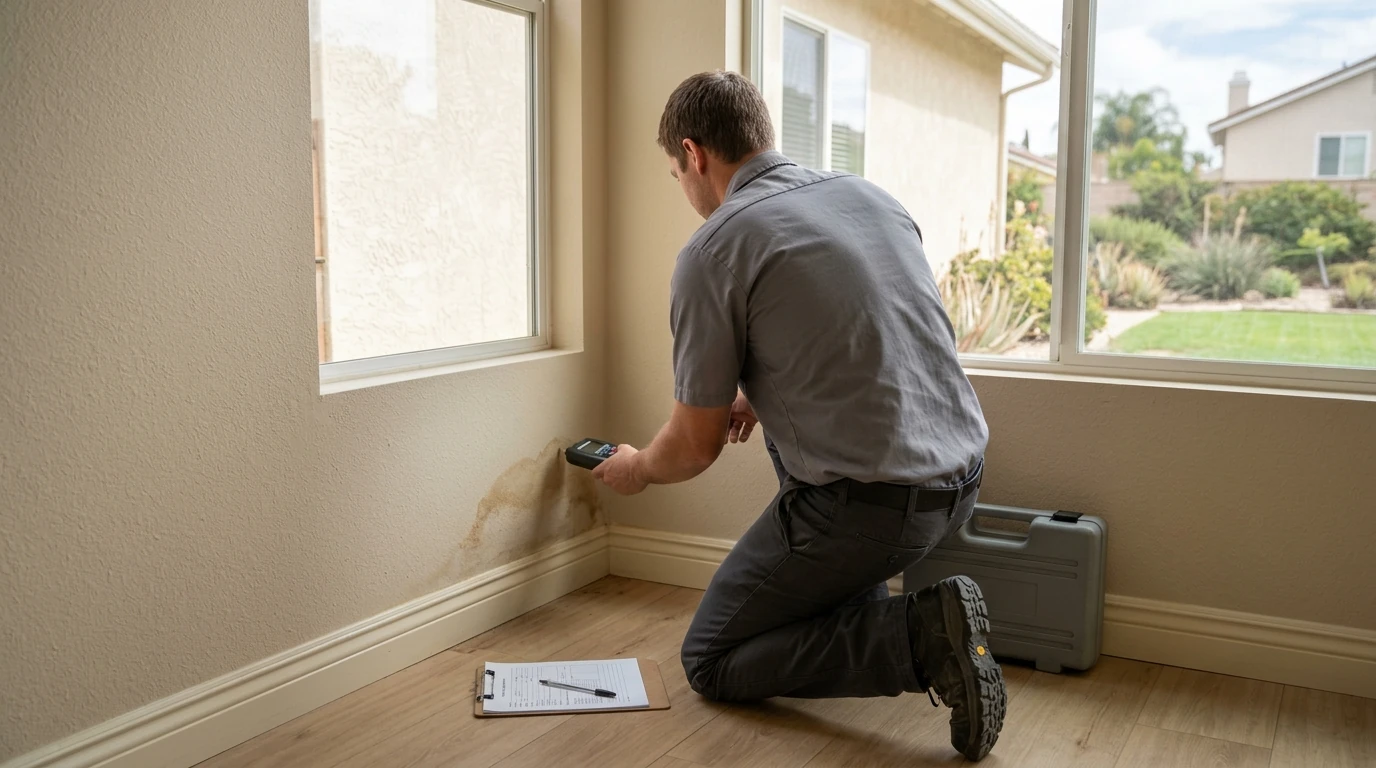
Above that size, or if the mold followed a flood, a slow leak you can’t locate, or a smell with no visible source, a mold inspection and testing visit comes first. An inspector uses a moisture meter and sometimes air sampling to map how far the problem has traveled behind walls or under flooring before anyone starts demolition. That scope becomes the basis for the remediation plan and for any insurance claim.
If you’ve already looked and you’re not sure what you’re seeing counts as mold at all, our guide to signs of hidden mold walks through what to look and sniff for before you make either call.
If you rent in Vista, when do you put it in writing to your landlord?
As soon as you find mold, not after you’ve waited to see if it gets worse. California’s habitability standards put the burden on landlords to address moisture and mold conditions that affect a unit’s livability, and a written notice, even a simple email with photos and the date, is what protects a tenant if the landlord is slow to respond.
Keep a copy of that notice and any photos you send. If the landlord doesn’t arrange an inspection or remediation within a reasonable window, that paper trail matters whether you end up contacting code enforcement, a tenant rights organization, or legal counsel. A restoration company can document the extent of the mold for that file, but the written notice to the landlord has to come from you.
Who pays for mold remediation: insurance, you, or the landlord?
For homeowners, a standard policy typically covers mold removal only when it resulted from a sudden, covered water event, like a burst supply line, not from a long-term leak or ongoing humidity. The Insurance Information Institute outlines how gradual damage and maintenance issues are usually excluded, and even covered mold claims often carry a lower coverage cap than the rest of the policy.
For renters, the landlord is generally responsible for remediating mold tied to a building defect (a roof leak, a plumbing failure, poor ventilation built into the unit), while a renters policy mainly protects the tenant’s own belongings, not the structure itself. For California health guidance on indoor mold exposure, the California Department of Public Health is a useful reference if you’re also weighing health concerns alongside the repair question.
Every policy and every lease reads differently, so this is general guidance, not a promise of what your specific claim will pay.
What happens when you call Dry 1 Out for mold in Vista?
The first call is a short triage conversation: where the mold is, roughly how large the area is, whether there’s an active water source, and whether you own or rent. From there, Dry 1 Out schedules a visit, often with a moisture meter and visual inspection, to confirm the scope before any containment or demolition starts.
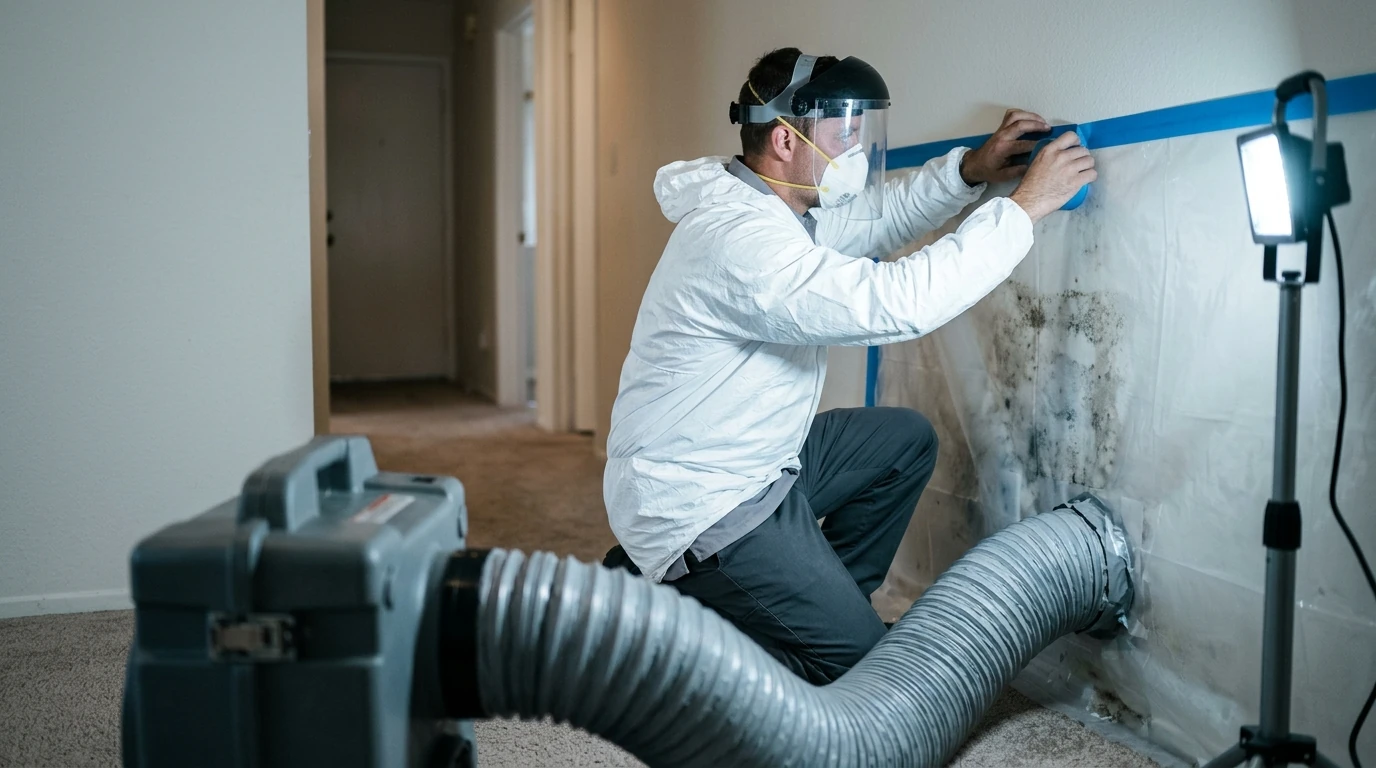
For anything beyond a small, contained patch, the crew sets up poly sheeting containment and negative air pressure before removing affected material, following the IICRC S520 mold remediation standard. You get a written scope of work before anything is torn out, which is also the documentation an insurance adjuster or a landlord will want to see.
Dry 1 Out works from offices in Vista and Hayward, with the Vista crew covering North San Diego County neighborhoods from Shadowridge to Downtown Vista and out toward Buena Creek. If the mold is tied to a leak that’s still active, ask about water damage restoration in the same call so one crew handles both the water and what it left behind.
If you’re staring at a patch of mold right now and you’re not sure which of these calls to make first, that’s exactly what the first call is for. Call Dry 1 Out at (888) 379-1688 and describe what you’re looking at; the team will tell you whether it’s an inspection, a remediation job, or something to put in writing to your landlord today.
About Dry 1 Out Restoration and Construction
Dry 1 Out Restoration and Construction is an IICRC Certified Firm, licensed in California (license #993442), with technicians holding IICRC AMRT mold remediation training. The company operates from offices in Vista, serving North San Diego County, and Hayward, serving the Bay Area, and answers calls 24/7. Their work covers mold inspection, mold remediation, and water damage restoration, among other restoration and reconstruction services. This article was written by Jason Pacheco with the Dry 1 Out team.